
Category Archives: Wills

Will I Be Disinherited If I Challenge the Will?

Most wills and trusts contain a provision that says something like this: “If any beneficiary hereunder shall attack this last will and testament, such beneficiary’s share shall be thereby revoked and such beneficiary shall receive nothing” or “If anyone shall challenge this document, I leave such person $1.00.” This type of clause is known as a “no contest” or “in terrorem” clause; the latter is Latin meaning to frighten someone. In other words, the person making the will or trust includes this clause in order to scare beneficiaries or would-be beneficiaries from initiating a legal challenge or contest to the will or trust.

Are no contest clauses actually enforceable? In Nevada, they are enforceable, but with some significant caveats. First, no heir will be disinherited for asking a court to enforce the terms of the will, or enforcing that person’s legal rights under the will or trust. Moreover, it is perfectly legitimate for an heir to petition the court for instructions with respect to how the will should be interpreted. Second, regardless of the no contest clause, an heir who, in good faith, has probable cause to believe that the will was invalid, may bring an action challenging the will without fear of being disinherited, provided that he or she meets the standards set forth in Nevada’s probate code.

Does this defeat the intention of the person who made the will? Hopefully not. No contest clauses are designed to threaten family members who got less than their “fair” share—for example, where someone is intentionally omitted or got less than his brothers or sisters. The trouble is that if no one could legally challenge a will without being disinherited, then many families would be out of luck in situations involving undue influence. For example, a caretaker or perhaps a girlfriend or recently acquired spouse may unduly influence a sick or dying person, swaying or even coercing the susceptible testator to execute a will leaving nothing to family members. Nevada’s law on no contest clauses is intended to balance the interests of those who are of sound mind and memory and want to give uneven shares to their family members with the interests of those who are sick and susceptible to undue influence when they execute their wills.

If you have questions, you should contact a qualified Nevada probate attorney.
By Sharon M. Parker, Esq.

Do It Yourself Estate Planning?

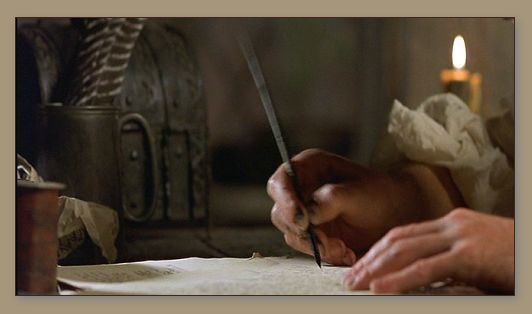
               Some years ago a woman called me in distress. Her neighbor, Mary, had died leaving some handwritten “final instructions”. The instructions were entirely in Mary’s handwriting and were signed, notarized and dated. Mary and her late husband had both prepared handwritten wills leaving all their property to charity. After her husband’s death, Mary had crossed out some provisions and written changes in the margins. Mary had named her neighbor the executor of her estate, but Mary’s family had already begun to plunder her house. The neighbor had no idea if the “final instructions” was a valid legal document.

                 Are handwritten wills valid in Nevada? Yes, provided they meet the following requirements: they must be signed, dated, and the material provisions must be in the handwriting of the testator. We were able to probate Mary’s will, and her neighbor was appointed the representative of her estate. However, the estate was unnecessarily complicated by the way in which the will had been written. It took significant time and effort to petition the court for instructions as to the validity and interpretation of the will and of the changes made in the margins, which reduced the amount of money available to the ultimate beneficiary of the estate.

                 Many people are reluctant to do any estate planning because they do not want to face their own mortality. Others are reluctant to pay an attorney to prepare a will or trust because they think they can save money by writing their own will. While a handwritten or “holographic” will is valid in Nevada if it meets the statutory criteria, you may save your personal representative a great deal of trouble—and your heirs a great deal of money—if you pay a professional to do the job right.

KTVN Money Watch Appearance

Jason C. Morris, Esq. appeared on KTVN Channel 2 News on October 6, 2010. Mr. Morris appeared on the KTVN’s Money Watch segment and discussed the current status of the estate tax. Mr. Morris recommended that taxpayers take action now in light of the lower estate tax exemption amount in January 2011.
Here is the link to the KTVN video: http://bit.ly/bwrtFz

Nevada Probate for Dummies®, Part One

“For a man may do his work with wisdom, knowledge and skill, and then he must leave all he owns to someone who has not worked for it. This too is meaningless and a great misfortune.” –Ecclesiastes 2:21

What happens to your belongings when you die? In Nevada, the answer largely depends on what preparation and planning you do while you are alive. It also depends on the size of your estate. For those who do not create a trust during their lifetime, or for those who do not put all their property into their trust, a court may oversee the process of transferring assets from the deceased to those who are entitled to inherit.

Nevada has four levels of probate or estate administration.

  1. Affidavit. If the deceased owned $25,000 or less, had no real property and no debts, the heirs can present a simple affidavit with a death certificate to a bank, DMV or the like in order to transfer title. In this case there is no need to file anything in court.  A surviving spouse may use the Affidavit for an estate with a gross value of less than $100,000.
  2. Set Aside. If the deceased owned $100,000 or less, the heirs can petition the district court to set aside the estate to the heirs or beneficiaries without any court supervised administration. This procedure is relatively simple and economical.
  3. Summary Administration. If the deceased owned between $100,000.01 and $300,000, the will must be lodged with the court and the person designated the personal representative or executor must conduct a formal, court supervised procedure to administer the estate, pay the debts and distribute the remaining assets to the heirs. If the deceased did not have a will, a relative or other interested person may petition to administer the estate. The assets would go to the relatives of the deceased in accordance with Nevada’s laws of intestate succession.
  4. General Administration. If the deceased owned more than $300,000, the estate must be administered under court supervision, as in a summary administration. The only difference between the two is that in a general administration, there is a longer period of time in which creditors have to file claims against the estate.

Sharon Parker

FOR DUMMIES® is a registered trademark of Wiley Publishing, Inc.