Tag Archives: Will

Heggstad Petitions in Nevada: Or, How to Bypass Probate and Get an Asset into a Trust after Death

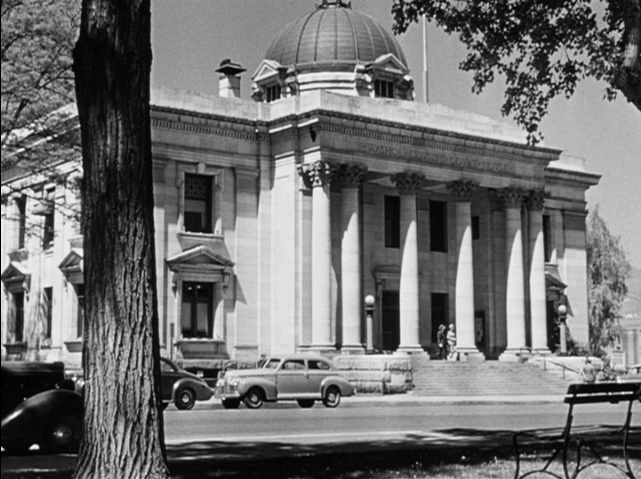
Washoe Co. Court House

It is unfortunately all too common that clients who set up a trust forget to transfer one or more assets into the trust; or they purchase a new home or other asset, and do not title it in the trust. In some cases, it is possible to avoid having to probate assets omitted from the trust if you can prove that the deceased intended to include that asset in his trust. In Nevada, this can be accomplished by way of filing a Heggstad petition with the probate court.

The name of the petition comes from a 1993 California case, In Re Estate of Heggstad, in which Mr. Heggstad created a trust but failed to execute the necessary paperwork to transfer his interest in certain real property into his trust. The successor trustee argued that Mr. Heggstad had intended that the asset be transferred to the trust by the fact that it was included in the schedule of assets attached to the trust. The court agreed, finding that that a written declaration of trust by the owner of real property, in which he names himself trustee, is sufficient to create a trust in that property; the law does not require a separate deed transferring the property to the trust.

In Nevada, the Heggstad case is not binding law, but a Heggstad type petition is provided for in the probate code, which allows a trustee or other interested person to petition the court to enter an order if the trustee has a claim to property and another holds title to or is in possession of the property. Pursuant to Nevada law, an omitted asset can be placed into the trust without a probate proceeding.

Under what circumstances will this be successful? You have to prove that the asset was intended to be in the trust. Inclusion of the asset on the schedule of assets was deemed sufficient in the Heggstad case. Another possibility is to show that the asset was in the trust but was inadvertently removed for some reason; for example, you had a bank account at First Bank titled in your trust and closed it and opened a new account with the money at Second Bank, but forgot to open the new account in the name of the trust. Each situation is different, but a knowledgeable probate attorney can help you evaluate your case.

In order to put the asset back in the trust, it is necessary to prepare and file a petition in the appropriate district court. The petition is set for a hearing and if approved, the court will issue an order transferring the assets into the trust without any further proceedings. This is a huge advantage over opening a probate estate as it cuts down significantly on the time required and on fees and costs.

Contact Woodburn and Wedge with your trust and estate issues. We can help you evaluate whether a Heggstad petition would work for your situation or whether another procedure is appropriate.


To Do List Upon Death of Family Member

The October 2012 issue of Consumer Reports highlights numerous steps one can take upon the passing of a family member or loved one.  Among the listed items, some steps are overlooked and cause greater anguish and financial difficulty for those who survive the decedent.

Consultation

While many employers receive word that an employee has passed, few surviving family members contact human resources or employe benefits coordinators.  Employer specialists can quickly begin the process of obtaining benefits and providing any pay due.  Certain financial institutions “drag their feet” when it comes time to pay out benefits so starting the pay-out process sooner is always beneficial.

Many family members fail to look for prepaid burial plans or other arrangements made by the decedent during lifetime.  If the decedent already paid for funeral services, the mortuary will pick-up the body and assist the family members with the completion of vital tasks. The mortuary or funeral home will help obtain death certificates and can assist in the coordination of the memorial or funeral service. As with many industries, the costs of these services have risen such that a prepaid plan can result in significant savings.

Hopefully, you are well aware of your loved ones’ wishes such that you will know whether a prepaid plan is in effect.  If not, you should at least know where the decedent kept important documents such as a trust, will, and financial documents.  If you have no idea where such important information is kept by your loved one, you should discuss the matter soon.  For assistance discussing these sensitive matters, you can contact an estate planning attorney today.

Jason C. Morris, Esq.

Joe Paterno’s Will Reveals Little More Than Revocable Living Trust

Today, closing arguments are being held in the jury trial of accused sex offender Jerry Sandusky.  His former boss, legendary Penn State football coach Joe Paterno, has created intrigue in an unrelated legal matter.  Paterno’s family sought court protection to seal Paterno’s will from public disclosure. After a local newspaper filed a motion to unseal the will, Paterno’s family made public his 1997 will and 2010 codicil to the will.

ImageAfter reviewing the contents to the will and the codicil, there is nothing surprising or notable about their contents.  The family’s efforts to seal the testamentary documents seem unreasonable and misguided.  Typically, wills must be lodged with the county court or probate department before the decedent’s assets may be distributed.  Paterno’s will is a pour-over will meaning it directs any probate assets to be poured over to a revocable living trust.  Most likely, the Paterno revocable living trust specifies the distribution of Paterno’s assets.

A revocable living trust is advantageous because you do not need to lodge the trust with the court.  The administration of the trust and distribution of the estate can take place outside of public review and records.  In addition, with advances in medicine and technology, individuals are living beyond their ability to manage their financial affairs.  Revocable living trusts allow successor trustees to take over and manage the financial affairs of those suffering from diminished capacity.

Living trusts are only effective insofar as you title the assets properly.  Your assets should be titled in the name of the trust.  The Paterno will, a pour-over will, acts as a backstop in the event that an asset is not titled properly in the name of the trust.   Any asset that is not transferred into a living trust must pass through probate first prior to its distribution.  Oddly, the Paterno family has not filed a petition to initiate a probate of any assets.  The family efforts to seal the will and codicil appear unnecessary and unusual. As with the Sandusky trial, the Paterno will story may end this week. Or, future court proceedings may loom ahead.

Divorce Forfeiture Provisions in a Will or Trust

A forfeiture provision may be drafted such that a couple must remain married in order for both spouses to receive distributions or withdrawals from the estate. Such a provision would not be invalid because the provision does not encourage divorce or disrupt the family relations. None of the Restatements of Law, which are legal treatises, prohibit forfeiture provisions upon divorce. In fact, some states allow reasonable restrictions upon remarriage of a surviving spouse.

Certain provisions in a will or trust may be held invalid on the basis that they would disrupt family relations. For example, a provision which provides for the payment of money to a beneficiary if he divorces or separates from a spouse may be invalid. Similarly, a provision which prohibits distributions to a beneficiary if he does not divorce or separate from a spouse may be invalid. Also, a provision cannot deny a bequest until a beneficiary’s spouse dies or the beneficiary divorces his spouse. Likewise, a trust or will provision must not prohibit marriage altogether or severely limit a beneficiary’s choice of spouse.

A dispositive instrument, will or trust, may provide for a beneficiary in the event of a divorce or death. A special disposition to an unmarried beneficiary may be available to relieve pressure upon the beneficiary to remain in or enter a marriage. Wills and trusts can be custom drafted to fit many varied situations. Whenever possible, the construction of a trust instrument will be favored that upholds the validity of the trust and renders the instrument effective.  Despite judicial inclination to uphold trusts, provisions violating public policy will be held invalid.

“Inception” Lacks a Trust

In the recent Hollywood hit movie, Inception, Leonardo DiCaprio plays a corporate espionage thief who extracts information from subjects while they are dreaming. DiCaprio and his crew of thieves are hired to plant an idea in the mind of an heir to the world’s most powerful energy company. The spies seek to coax the heir into believing his father wants him to break-up the father’s vast energy empire. The flaw in Inception is that the dying patriarch of the energy giant sets forth his wishes in a last will and testament. The average business owner or an energy titan owner would not hold business interests outside of a trust or set forth his dispositive wishes in a will.

A trust serves many valuable functions; it is not just for business owners (or, the wealthy). A few reasons why you should consider putting your assets in a trust:

  • Provide Financial Management of your Property – You may act as trustee at first and later decide you no longer wish to do so. A trustee or successor trustee you’ve selected can take over the day-to-day property management.
  • Provide Property Management if you can’t manage your affairs – If you become too ill or disabled to manage your property, your trustee or successor trustee will do this for you. With no trust in place, you would need a guardianship (or, conservatorship outside of Nevada). You can avoid the trouble and expense of setting up such arrangements if you have a living trust.
  • Avoid Probate – Property in your revocable living trust doesn’t go through probate after your death. However, if you fail to title property in the name of the trust, those assets will have to pass through probate.
  • Quick Distribution to Beneficiaries – This is another advantage of avoiding probate. The probate process delays property distribution. With a trust, your trustee can distribute property to your beneficiaries sooner.

A trust does not eliminate the need for a will. You may have property that never gets transferred to your trust. A will can act as a backstop to transfer any property to your trust. However, if you happen to own the world’s largest energy company, you should definitely have a trust.

by: Jason Morris, Esq.