Tag Archives: Probate

Who Gets Your Property if You Die Without a Will?

natasha_fatalle___boris_badenov[1]

In my last installment (Who Is Qualified to Serve as Administrator of an Estate?), I wrote about Boris and Natasha and the Big Fight occasioned by Boris dying without a will. As you may recall, Boris had two adult children from a prior marriage when he married Natasha. He and Natasha had two children before Boris died without a will. His property was substantial and all of it was acquired prior to his marriage. What happened to the property on his death?

The good news is that no one was disinherited, and the property did not escheat to the state. Nevada law provides for property to go to your closest relatives if you die without any estate planning in place. In a community property state such as Nevada, a married person’s property may be either community or separate, or some combination of the two. Separate property is property acquired before marriage, as well as property acquired by gift or inheritance during marriage. All property earned during marriage, or purchased with earnings during marriage, is community property. These characterizations can be changed by a written agreement if the couple wishes.

For Boris and Natasha, all of Boris’s property was separate property and he left no will. Nevada law provides that in such case, the surviving spouse is entitled to one third of the separate property, and—because he had more than one surviving child—the children were entitled to equal shares of the remaining two-thirds. Boris did not put any of his assets into joint tenancy with Natasha, but if he had, Natasha would have succeeded to such assets. Once the estate administration finished, Natasha received one-third of Boris’s assets; the couple’s minor children received one-third subject to a guardianship or trust until they became adults; and Boris’s two adult children received the remaining one-third in equal shares.

Who Is Qualified to Serve as Administrator of an Estate?

Treasure Chest

Some years ago a wealthy older man I’ll call “Boris” got married to a foreign national half his age. Boris was a Nevada resident. He brought “Natasha” to the U.S. after their marriage. She was intelligent but did not speak English well and was unfamiliar with American culture and basic business practices. Boris had two adult children from a prior marriage who both lived out of state. Three years after his marriage to Natasha, Boris died without any estate planning in place. At his death, who was qualified to be the administrator of his estate?

If Boris had made a will, he could have nominated whomever he wanted to act as executor of his estate. (As a note on vocabulary, the term “executor” refers to someone nominated in a will, whereas the term “administrator” refers to someone appointed by the court in a situation where there is no will.) If a Nevada resident dies without a will, that person’s estate may be administered by a qualified person. The Nevada probate code sets forth the priority in which the court will consider candidates; a surviving spouse has first priority, and a child (18 or older) has second priority.

Need I say that Boris’s adult children did not get along with Natasha all that well? They did not trust her at all, and they believed she did not speak English well enough nor understand basic survival skills nor basic obligations (e.g. that Boris’s death did not mean his bills didn’t have to be paid) to be the administrator of their father’s estate.

What qualifies someone to act as the administrator of an estate where there is no will? An administrator must be at least age 18 and not convicted of a felony, unless the court determines that such a conviction should not disqualify the person. Someone will be disqualified if upon proof, he or she is adjudged by the court to be disqualified by reason of conflict of interest, drunkenness, improvidence, or lack of integrity or understanding. Finally, the person must either be a Nevada resident or must associate as a co-administrator with someone who is a Nevada resident.

Boris’s children had two impediments to petitioning for appointment of themselves as administrator: they were not Nevada residents and they did not have priority over Natasha because she was Boris’s surviving spouse. In order to prevent Natasha from serving as administrator of the estate, it was necessary for them to prove in court that Natasha was disqualified by reason of improvidence or lack of integrity or understanding. In the end, however, neither Natasha nor the children were appointed administrator. Instead, Natasha invoked a statute that allowed her, as the person with first priority, to nominate someone else to act as administrator—and she nominated a local accountant who was perfectly qualified and did a great job.

Lesson learned? Do some estate planning—preferably while you are still well enough to think clearly and act independently. Choose a personal representative who is both competent and trustworthy. Boris could have avoided a fight among his relatives by executing a will naming someone to act as executor of his estate, and he could have better provided for disposition of his assets—which were significant.

You may be wondering what happened to Boris’s estate—who was entitled to receive his property? Stay tuned for the next installment of As the Probate World Turns.

Heggstad Petitions in Nevada: Or, How to Bypass Probate and Get an Asset into a Trust after Death

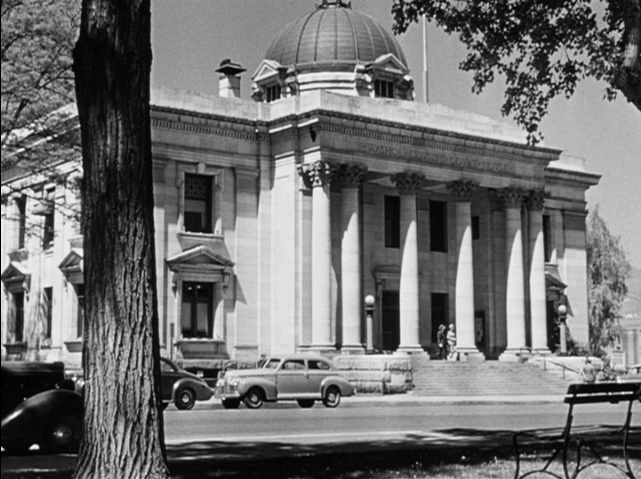
Washoe Co. Court House

It is unfortunately all too common that clients who set up a trust forget to transfer one or more assets into the trust; or they purchase a new home or other asset, and do not title it in the trust. In some cases, it is possible to avoid having to probate assets omitted from the trust if you can prove that the deceased intended to include that asset in his trust. In Nevada, this can be accomplished by way of filing a Heggstad petition with the probate court.

The name of the petition comes from a 1993 California case, In Re Estate of Heggstad, in which Mr. Heggstad created a trust but failed to execute the necessary paperwork to transfer his interest in certain real property into his trust. The successor trustee argued that Mr. Heggstad had intended that the asset be transferred to the trust by the fact that it was included in the schedule of assets attached to the trust. The court agreed, finding that that a written declaration of trust by the owner of real property, in which he names himself trustee, is sufficient to create a trust in that property; the law does not require a separate deed transferring the property to the trust.

In Nevada, the Heggstad case is not binding law, but a Heggstad type petition is provided for in the probate code, which allows a trustee or other interested person to petition the court to enter an order if the trustee has a claim to property and another holds title to or is in possession of the property. Pursuant to Nevada law, an omitted asset can be placed into the trust without a probate proceeding.

Under what circumstances will this be successful? You have to prove that the asset was intended to be in the trust. Inclusion of the asset on the schedule of assets was deemed sufficient in the Heggstad case. Another possibility is to show that the asset was in the trust but was inadvertently removed for some reason; for example, you had a bank account at First Bank titled in your trust and closed it and opened a new account with the money at Second Bank, but forgot to open the new account in the name of the trust. Each situation is different, but a knowledgeable probate attorney can help you evaluate your case.

In order to put the asset back in the trust, it is necessary to prepare and file a petition in the appropriate district court. The petition is set for a hearing and if approved, the court will issue an order transferring the assets into the trust without any further proceedings. This is a huge advantage over opening a probate estate as it cuts down significantly on the time required and on fees and costs.

Contact Woodburn and Wedge with your trust and estate issues. We can help you evaluate whether a Heggstad petition would work for your situation or whether another procedure is appropriate.

Separate Assets, Joint Problems

Image

Some married couples enjoy living together while keeping their financial assets separate. Separate ownership of assets can be advantageous in some instances, but oftentimes loving couples misunderstand the results of holding separate assets.  The Wall Street Journal recently highlighted four potential pitfalls for couples maintaining separate accounts:

  1. The assets are not necessarily separate under Nevada law.

Simply having your name on an account does not mean the account is yours alone.  Under Nevada law, pursuant to community property principles, all of your earnings and wages after marriage are the property of both parties.   This is true even if you have your paycheck deposited into a separate account.

Nevada inheritance laws can surprise couples. If you die without a will and leave a surviving spouse, no children and surviving parents, your parents are entitled to a portion of your estate.  Many spouses intend for their entire estate to go to a surviving spouse.  However, unless that desire is set forth in a will or trust, the state may direct otherwise.

  1. Separate accounts most often mean lack of communication.

Communication between spouses is critical.  Many spouses have separate retirement accounts and manage those accounts in isolation.  This isolated planning can undermine the couple’s financial objectives and their combined risk tolerance.  Regularly, I meet with clients where both spouses are unaware of accounts or policies that one spouse possesses.  These omissions could cause the account proceeds to go missing or remain unclaimed for long periods of time.

In addition, holding similar investments in two separate accounts can be more costly.  Combining the separate holdings may result in lower advisory fees.

  1. Separately-owned property may be at greater risk in bankruptcy or a lawsuit.

Nevada has very liberal exemptions for bankruptcy purposes.  These protections can be utilized best by conferring with an attorney who focuses on asset protection planning.

Joint ownership can make your assets less appealing to creditors.  Creditors loathe joint assets in which they will hold only a one-half interest.  Separately-owned property is less-protected from creditors.  The home is the primary asset to hold jointly or through a trust.

  1. Separate accounts are more difficult to administer.

The death of a loved one causes plenty of heartache.  Maintaining separate account causes needless headaches too.  The time delay in accessing separately-owned accounts can lead to draining financial stress.  Many financial institutions demand formal court orders before allowing access to financial accounts, even when such orders are not necessary.  At a minimum, couples should maintain a joint checking or savings account to make sure the day-to-day expenses can be satisfied.

Careful with Deathbed Planning

As death looms, people become much more focused on arranging their affairs.  Even those with few assets will develop a laser-like focus on leaving a suitable legacy.  There are pitfalls to death-bed estate plans or revisions to existing plans.  In a perfect world, an estate plan is constructed carefully after much thought and revisions are made regularly.  However, lawyers and financial advisors are often solicited to make changes when a client fears an imminent demise.

Image

Recently, I helped clients update their revocable living trust after the wife was diagnosed with terminal cancer.  They created their trust 20 years ago and had not made any updates since that time.  In the intervening years, one of their five children had passed away and numerous grandchildren had been born.  The prior version of their trust provided that if one of their children predeceased them, the surviving children would receive the estate equally.  The clients instead wanted the trust share that would have passed to the deceased child to be held in trust for the deceased child’s children or the clients’ grandchildren.  If nothing had been done, the clients would have disinherited their grandchildren.

When making near-death amendments or creating new estate plans, advisors and clients must consider the income tax ramifications. A common mistake is to transfer a home or real property to children or grandchildren prior to death.  Such a transfer results in loss of the step-up in basis of the property to the date-of-death fair market value.  The child or grandchild receiving the property steps into the shoes of the transferring parent or grandparent and takes the transferor’s basis in the property.  Usually, the basis is much lower than the present day fair market value.  When the child or grandchild sells the property, he or she will incur a much higher capital gains tax than necessary.

Finally, to avoid a contest, a medical or mental competency examination can assure that the client is competent to make the change.  These exams can be administered by the client’s regular physician.  By using their normal physician, the client will feel more at ease and the physician will already have a history with the client and be able to differentiate whether the client lacks capacity.

Death-bed planning can be done effectively but there are numerous considerations and precautions to follow.