
Tag Archives: Estate Planning

Heggstad Petitions in Nevada: Or, How to Bypass Probate and Get an Asset into a Trust after Death

Washoe Co. Court House

It is unfortunately all too common that clients who set up a trust forget to transfer one or more assets into the trust; or they purchase a new home or other asset, and do not title it in the trust. In some cases, it is possible to avoid having to probate assets omitted from the trust if you can prove that the deceased intended to include that asset in his trust. In Nevada, this can be accomplished by way of filing a Heggstad petition with the probate court.

The name of the petition comes from a 1993 California case, In Re Estate of Heggstad, in which Mr. Heggstad created a trust but failed to execute the necessary paperwork to transfer his interest in certain real property into his trust. The successor trustee argued that Mr. Heggstad had intended that the asset be transferred to the trust by the fact that it was included in the schedule of assets attached to the trust. The court agreed, finding that that a written declaration of trust by the owner of real property, in which he names himself trustee, is sufficient to create a trust in that property; the law does not require a separate deed transferring the property to the trust.

In Nevada, the Heggstad case is not binding law, but a Heggstad type petition is provided for in the probate code, which allows a trustee or other interested person to petition the court to enter an order if the trustee has a claim to property and another holds title to or is in possession of the property. Pursuant to Nevada law, an omitted asset can be placed into the trust without a probate proceeding.

Under what circumstances will this be successful? You have to prove that the asset was intended to be in the trust. Inclusion of the asset on the schedule of assets was deemed sufficient in the Heggstad case. Another possibility is to show that the asset was in the trust but was inadvertently removed for some reason; for example, you had a bank account at First Bank titled in your trust and closed it and opened a new account with the money at Second Bank, but forgot to open the new account in the name of the trust. Each situation is different, but a knowledgeable probate attorney can help you evaluate your case.

In order to put the asset back in the trust, it is necessary to prepare and file a petition in the appropriate district court. The petition is set for a hearing and if approved, the court will issue an order transferring the assets into the trust without any further proceedings. This is a huge advantage over opening a probate estate as it cuts down significantly on the time required and on fees and costs.

Contact Woodburn and Wedge with your trust and estate issues. We can help you evaluate whether a Heggstad petition would work for your situation or whether another procedure is appropriate.

Careful with Deathbed Planning

As death looms, people become much more focused on arranging their affairs.  Even those with few assets will develop a laser-like focus on leaving a suitable legacy.  There are pitfalls to death-bed estate plans or revisions to existing plans.  In a perfect world, an estate plan is constructed carefully after much thought and revisions are made regularly.  However, lawyers and financial advisors are often solicited to make changes when a client fears an imminent demise.

Image

Recently, I helped clients update their revocable living trust after the wife was diagnosed with terminal cancer.  They created their trust 20 years ago and had not made any updates since that time.  In the intervening years, one of their five children had passed away and numerous grandchildren had been born.  The prior version of their trust provided that if one of their children predeceased them, the surviving children would receive the estate equally.  The clients instead wanted the trust share that would have passed to the deceased child to be held in trust for the deceased child’s children or the clients’ grandchildren.  If nothing had been done, the clients would have disinherited their grandchildren.

When making near-death amendments or creating new estate plans, advisors and clients must consider the income tax ramifications. A common mistake is to transfer a home or real property to children or grandchildren prior to death.  Such a transfer results in loss of the step-up in basis of the property to the date-of-death fair market value.  The child or grandchild receiving the property steps into the shoes of the transferring parent or grandparent and takes the transferor’s basis in the property.  Usually, the basis is much lower than the present day fair market value.  When the child or grandchild sells the property, he or she will incur a much higher capital gains tax than necessary.

Finally, to avoid a contest, a medical or mental competency examination can assure that the client is competent to make the change.  These exams can be administered by the client’s regular physician.  By using their normal physician, the client will feel more at ease and the physician will already have a history with the client and be able to differentiate whether the client lacks capacity.

Death-bed planning can be done effectively but there are numerous considerations and precautions to follow.

Updating Your Estate Planning after You Get Married

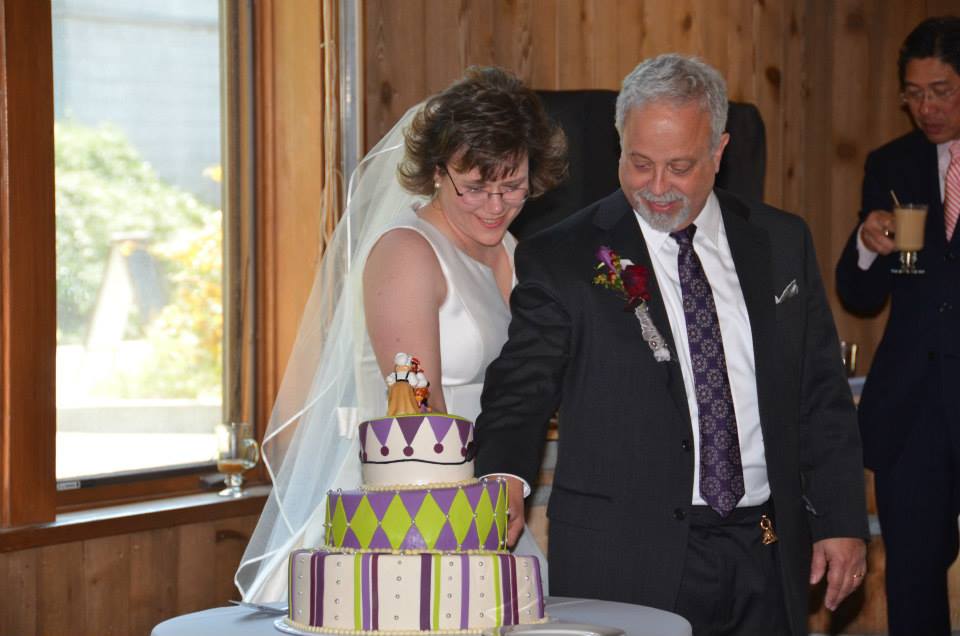
ImageMy husband and I were married this past May 25, so today we are celebrating our sixth mensiversary (or, perhaps our semi-anniversary?). Our marriage has truly been a great blessing for both of us—doubly so because we waited until later in life to find each other. As a probate and estate lawyer, I’d like to report that as soon as we got married, we set up a trust and put all our assets in it, so that we’re perfectly prepared for the day when death does us part. However…it seems that life is a bit messier and more complicated than that, even for lawyers in love. We’ve each taken the step of updating our wills, and many of our assets are now jointly owned; but truth be told, we have a way to go before we are done combining our assets.

How does marriage change your estate planning needs? I’ve had opportunity to reflect on this recently not only because of my own life, but also because of some of the cases I’ve worked on. In one case, a couple cohabited for several years before the man died. He left no will, so pursuant to intestate succession, his child will inherit his estate. However, the former girlfriend has made a claim against his estate, claiming that they held their property in a kind of quasi-community property agreement. Would it have made a difference if they’d been married?

Yes and no. Simply getting married doesn’t mean your property is jointly held or will go to your spouse upon your death. Nevada is a community property state, meaning that money earned or assets purchased during marriage are presumed to be community property in which each spouse has fifty percent interest. Upon death, the surviving spouse inherits the other half of the community property, unless the deceased spouse provides otherwise in his or her will. Property that you owned before marriage is separate property and remains so unless you make a gift of it to the community of your marriage. Your spouse may inherit a portion of your separate property, but a portion will go to your natural relatives (children from previous marriage, parents, siblings)—again, unless you provide otherwise by will. Things can get very complicated if your assets become mixed in character; for example, if you have a house partially paid off that you bring into the marriage, and you finish paying it off while married. The house is separate to the degree you paid for it before marriage and community property to the degree that your income during your marriage was used to pay the mortgage.

My husband and I have not been married previously and neither of us has any children. If we have no children together, we will need to make provision for how our assets will be distributed upon the death of the second spouse—it will need to go to charities we both agree on, or equally to our surviving relatives. In the case of people who have children from a previous marriage or relationship, things are more complicated. You need to provide for your children while taking into consideration the needs of your new spouse.

Don’t put off your estate planning—consider it an act of love for your family, who doesn’t want to be left with a mess. Contact Woodburn and Wedge for expert advice and assistance with estate planning, trust and probate matters.

To Do List Upon Death of Family Member

The October 2012 issue of Consumer Reports highlights numerous steps one can take upon the passing of a family member or loved one.  Among the listed items, some steps are overlooked and cause greater anguish and financial difficulty for those who survive the decedent.

Consultation

While many employers receive word that an employee has passed, few surviving family members contact human resources or employe benefits coordinators.  Employer specialists can quickly begin the process of obtaining benefits and providing any pay due.  Certain financial institutions “drag their feet” when it comes time to pay out benefits so starting the pay-out process sooner is always beneficial.

Many family members fail to look for prepaid burial plans or other arrangements made by the decedent during lifetime.  If the decedent already paid for funeral services, the mortuary will pick-up the body and assist the family members with the completion of vital tasks. The mortuary or funeral home will help obtain death certificates and can assist in the coordination of the memorial or funeral service. As with many industries, the costs of these services have risen such that a prepaid plan can result in significant savings.

Hopefully, you are well aware of your loved ones’ wishes such that you will know whether a prepaid plan is in effect.  If not, you should at least know where the decedent kept important documents such as a trust, will, and financial documents.  If you have no idea where such important information is kept by your loved one, you should discuss the matter soon.  For assistance discussing these sensitive matters, you can contact an estate planning attorney today.

Jason C. Morris, Esq.

Deductibility of Legal Fees for Estate Planning

**UPDATE: Tax Cuts and Jobs Act (TCJA) enacted on December 22, 2017, provided, “[n]otwithstanding subsection (a) [subjecting certain miscellaneous itemized deductions to the 2 percent floor], no miscellaneous itemized deductions shall be allowed for any taxable year beginning after December 31, 2017, and before January 1, 2026.”**

Section 212 of the Internal Revenue Code (the “Code”) provides that a deduction is available for all the ordinary and necessary expenses paid or incurred during the taxable year:

1. for the production or collection of income;

2. for the management, conservation, or maintenance of property held for the production of income; or

3. in connection with the determination, collection, or refund of any tax.

Section 212 is limited by the two percent (2%) floor under § 67 of the Code. Section 67 provides an individual’s “miscellaneous itemized deductions” may only be deducted to the extent that the aggregate of the deductions exceed two (2%) percent of adjusted gross income. IRC §67(a).  Because of the itemized deductions floor, most clients will not benefit from a deduction for legal expenses incurred in estate planning.

The Tax Court has considered numerous cases to determine whether legal fees incurred in estate planning are deductible.  One of the first cases to allow a deduction for estate planning fees, Bagley v. Commissioner, found that the law firm provided deductible legal services under §212(2).  The law firm consulted the clients with regard to tax-favorable investments, loans to the corporation owned by the client family, and the review and creation of estate plans for the family members.

In Merians v. Commissioner, the court allowed a §212(3) deduction for legal fees allocated to tax advice.  The court narrowly construed their decision to a deduction for only the portion of services which it considered tax advice.  The attorney did not maintain accurate time entry or billing records reflecting the amount of time spent on tax-related aspects of his representation.

The Tax Court has disallowed deductions for legal fees paid for estate planning and general business guidance when the taxpayer does not have any evidence of how the fees relate to the §212 categories.  The mere preparation of a will or testamentary trust will not be deductible.  However, an argument can be made that the creation of a revocable living trust is a tax-motivated transaction for the management and conservation of property.  Similarly, the taxpayer could argue the fees were incurred in connection with the determination (minimization) of the taxpayer’s future tax liability. Therefore, the fees should be deductible under §§212(2) and 212(3).