Tag Archives: Estate Planning

Can You Probate a Lost Will?

LWT March 2015

I once had a client whose husband had died many years previous, leaving a will in which he left all his property to her. The will had been prepared by a local attorney who later retired, and had died by the time the client retained me. The client had furnished a copy of the will to her accountant, who used it to prepare an estate tax return. However, the accountant only had a copy of the first few pages of the will, not including the signature pages. The client evidently lost the original will and could not locate a copy of it. All we had to go on was the copy of a portion of the will that the accountant had. I did my best to track down the original will or a copy. The drafting attorney was deceased and although I located his former secretary, she indicated that his files had not been retained; the will would have gone back to the client. In short, there was no extant copy of the full will.

Can you probate a lost will? In some instances, yes. If a will is lost by accident after the decedent’s death, or destroyed by fraud during the decedent’s lifetime and without his or her knowledge, a court may receive evidence of the execution and validity of the will. A lost will would have to be proved in the same way as other wills; the persons who witnessed the testator sign the will would have to testify to that fact. This may not be difficult if you know who the witnesses were and can locate them. Often the witnesses of a will are law office personnel. Most law office personnel who witness wills do so often enough that they would not be able to recall a particular instance; especially not where the will had been signed many years prior. If you can locate the witnesses and they remember the will, then the proponent of a lost will has to show that it is more likely than not that the will in question was never revoked by the testator; if no one objects, the court may admit it to probate. In the case of my client, we didn’t know who had witnessed the will because we did not have the signature pages or the pages signed by the witnesses. Without that, we could not offer the lost will for probate.

Lessons learned? Make sure your original will, and your spouse’s original will, are kept in a secure, fire safe location and that the location is known to those who will handle your estate at your death. Often an attorney’s office will store the original will in a vault. If your attorney retires and returns the original to you, put it in another safe place, such as a safe deposit box. Better yet, go to another attorney and see if the will needs updating; the new attorney may have a vault where the will and codicil could be stored. Make sure to keep full copies of the executed will. Finally, keep the original will and copies after the testator dies, even if you do not think there are any assets to probate at his or her death. This is critical! In the case of my client, her husband had died 20 years prior and she thought all assets were in joint tenancy at their death. It was only in refinancing some property that she discovered this was not the case.

If you have questions or concerns about lost wills or the proper care of original estate planning documents, consult with a qualified estate attorney.


Facebook Beneficiary Designations

World Wide Web

When was your last Facebook post?  Maybe more importantly, when did you update your Facebook beneficiary designation? Facebook, the world’s most popular social network, recently changed its policy to allow users to designate a “legacy contact.” The legacy contact will be permitted to manage portions of the users’ account posthumously.

Facebook initially froze deceased users’ accounts upon receiving notice of the death.  This original, hard-line policy angered many users’ family members, heirs and other users who wanted to edit the deceased’s account or provide information to friends.  Google, traditionally at the forefront, became the first Internet company to permit users to select digital heir for its Gmail email service and other services.  Facebook has followed Google’s lead and finally welcomed legacy contacts.

The legacy contacts will be able to post to users’ pages, change the profile picture, and even respond to friend requests.  There are numerous settings and levels of permission which can be granted, including access to the decedents’ posts and photos. The legacy contact cannot edit the decedent’s posts or what his or her friends post.  The legacy contact will not have access to the decedent’s messages nor will the contact be allowed to delete the account.  Facebook users may still choose to have their entire account deleted at death.

To designate your legacy contact, go to ‘Settings’ and selected ‘Security’ and then click ‘Legacy Contact’ at the bottom of the page.  From there you can designate an existing Facebook friend and give that friend permission to download an archive of your data or choose to have your account deleted at death.  As with most initial policies, Facebook’s current offerings are not optimal.  You must name an existing Facebook user and you can only select one legacy contact.  So spouses who travel extensively together may consider naming another individual. If you do not name a legacy contact, Facebook will honor digital designations made in a traditional, legal will.  For assistance with these and any other beneficiary designations, please contact our experienced estate planning attorneys.

Leaving Your Estate to Charity

Consultation

Would you leave a $150 million estate to your hometown? David Gundlach did. Gundlach made his fortune through the sale of a highly profitable insurance company. He left no heirs and wanted to give his money away. Gundlach left his entire estate to the Elkhart County Community Foundation in Indiana. Not only was this an extraordinary gift in size, but it was very unusual for another reason. Gundlach did not leave any stipulations on the use of the proceeds; the Foundation can use the funds any way it desires. The WSJ profiled Mr. Gundlach and his significant gift last year.

Mr. Gundlach is not alone in leaving a significant gift to charity. Increasingly, we see clients without children of their own looking to leave a lasting legacy through charitable bequests. Rarely do clients leave all of their estate to one charity but rather most clients spread the distribution of their estate across a number of charities. Many clients like to include specific uses for their funds. We regularly see bequests made to educational institutions for scholarships for needy students. Pet charities are a common choice for clients who do not favor any particular educational or religious institutions. For those without a particular charitable objective, a community foundation can be a great choice.

The virtue of a community foundation is the close relationship with the foundation and the local community. Like Elkhart, Indiana, we too have a community foundation in northern Nevada; it is the Community Foundation of Western Nevada (“CFWN”). The CFWN has given over $65 million in grants to our local community since its establishment in 1998. The CFWN manages donor advised funds, scholarship funds, and nonprofit endowments. In addition, the CFWN offers educational workshops, provides hands-on giving experience to high school students, and promotes giving among charitable boards. All of these efforts and programs enhance our community and enrich many lives. If you have charitable desires, there are innumerable ways you can leave your assets to benefit others, even if your estate is more modest than Mr. Gundlach’s.

Bleak House

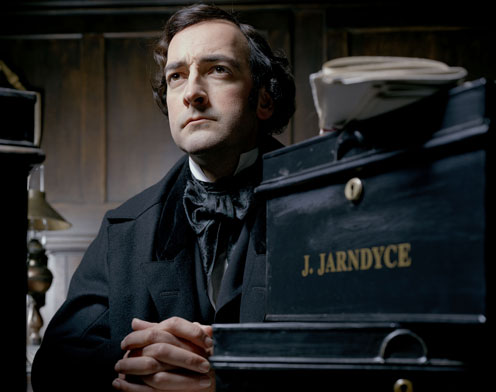
Bleak House Jarndyce

“There are two motives for reading a book; one, that you enjoy it; the other, that you can boast about it.” -Bertrand Russell

As both a lover of great literature and a probate lawyer, I put Bleak House by Charles Dickens on my “to read” list years ago. My father had mentioned it to me several times, noting with amusement that the estate lawsuit at the heart of the novel didn’t end until the money ran out. At 989 pages, it’s not what you’d call a weekend read, but I finally hunkered down and plowed through it. While it is anything but a positive reflection on lawyers and the legal system of nineteenth century England, it is wicked funny and a great read. (Plus, I can boast about it.) G.K. Chesterton is quoted on the back cover as saying it was “Perhaps his best novel…when Dickens wrote Bleak House he had grown up.”

The novel opens on the fog that engulfs the Chancery Court in London where probate cases were adjudicated. The case of Jarndyce and Jarndyce has been in probate for generations; people literally are born into the suit and die before it is resolved. Dickens is pretty vague about the particulars of the case. One character tells us, “‘Why, yes, it was about a Will when it was about anything. A certain Jarndyce, in an evil hour, made a great fortune, and made a great Will. In the question how the trusts under that Will are to be administered, the fortune left by the Will is squandered away; the legatees under the Will are reduced to such a miserable condition that they would be sufficiently punished, if they had committed an enormous crime in having money left them; and the Will itself is made a dead letter.”

Many of the novel’s characters are beneficiaries under the will and spend their lives waiting for the lawsuit to be resolved. One unfortunate young man, Richard, drives himself to an early grave in his obsession to see the suit completed. Miss Flyte, another beneficiary, keeps a series of birds locked up in a cage, intending to let them free when she is free of the lawsuit and receives her inheritance.

Dickens is merciless about the purpose of all the delay: “The one great principle of the English law is, to make business for itself. There is no other principle distinctly, certainly, and consistently maintained through all its narrow turnings. Viewed by this light it becomes a coherent scheme, and not the monstrous maze the laity are apt to think it. Let them but once clearly perceive that its grand principle is to make business for itself at their expense, and surely they will cease to grumble.” Thus, as one character dryly remarks, “Equity sends questions to Law, Law sends questions back to Equity; Law finds it can’t do this, Equity finds it can’t do that; neither can so much as say it can’t do anything, without this solicitor instructing and this counsel appearing for A, and that solicitor instructing and that counsel appearing for B; and so on through the whole alphabet, like the history of the Apple Pie.”

Let’s just say it will not endear you to lawyers or the legal system; but mercifully, the 21st century American probate court little resembles its 19th century English counterpart. Our system is geared toward the timely resolution of disputes; and to the extent it fails, I have found that it is generally because angry litigants—not courts—want to use the legal system to wage Pyrrhic battles.

While the lawsuit in Bleak House forms the backdrop of the case, and gives Dickens the opportunity to train his savage wit on the English legal system, the heart of the story is not really about the lawsuit itself. Bleak House offers a wonderful panorama of characters and richly interwoven plots and subplots. It is partly narrated by Esther Summerson, one of the main characters, an orphan whose family origins are shrouded in mystery. It features unforgettable characters such as Lady Dedlock, the proud and aristocratic wife of Sir Leister Dedlock, who harbors a painful secret; Mr. Tulkinghorn, Sir Leister’s scheming lawyer who spends much of the novel hot on the tracks of Lady Dedlock’s secret, and whose death late in the narrative briefly turns the novel into a murder mystery; and Mr. Skimpole, the financially improvident rascal who remorselessly sponges off others while feigning a child-like innocence about the ways of the world.

Bleak House is well worth putting on your bucket list. And if you don’t want to invest the time reading it, I am informed that it was turned into a brilliant mini-series by BBC, though I have not seen it—yet. I’m putting it on my “to watch” list.

5 Ways to Transfer the Family Business

The following article on business succession planning appeared in the February 10, 2014 issue of Northern Nevada Business Weekly:

JCM ProfileAs a business owner, you will have to decide when will be the right time to step out of the family business and how you will accomplish a successful transition. There are many estate planning tools you can use to transfer your business. Selecting the right tool will depend on whether you plan to retire from the business or keep it until you die.

The transfer can be an emotional minefield where some family members are participants in the business and others are non-participants.  Those participants may feel “obligated” to stay in the family business when they would rather do something else.  In addition, the transfer can be complicated due to estate taxes, gift taxes and capital gains taxes.

Moreover, sometimes the family business is only profitable enough to support one child, even though the non-participants may believe the business’ finances should support them. Or, only some or none of your children may have the abilities or skills to run the business.

Transfer of the family business is further complicated when – as is frequently the case – the family business represents all or nearly all of the parents’ wealth.  Passing the business on to one or more children, while treating all your children fairly, is not easy.

Transparency and communication are vitally important. To achieve the best result, the entire family should receive (1) an explanation of your plan and why you are undertaking a particular strategy; (2) sincere, personal discussions clarifying that you love them equally; and (3) a promise that you are doing your best to be fair to all, while ensuring the future viability of the business.

Here are the 2014 tax exclusion and exemption amounts to consider when analyzing the various alternatives available for the transfer of a family business:

  • The annual exclusion for gifts is $14,000 per donee (meaning husband and wife can each gift $14,000 to a recipient); and
  • The federal gift and estate tax exemption for transfers during life or at death is $5,340,000.

Business sale to the participating child through an installment sale.  This is considered one of the simplest methods of transferring the family business to a child or children.  You can sell shares or partnership interests to a family member.  The benefit of this method is that installments payments can be made over time, which provides an income for you after your retirement. Another benefit is that the purchasing child can better manage his or her cash flow and does not have to come up with a large sum of money at once. However, you will incur capital gains if the business sells for more than what you have invested.    

Gift the business to some children and give cash to the others. Gift taxes are likely to be incurred with this strategy. A more practical concern than paying gift taxes is the fact that you may not have sufficient cash to equalize the value of the business assets going to your other children. This dilemma can be solved with a sizeable life insurance policy which names the non-participant children as beneficiaries. There are various ways to handle the life insurance, including setting up an irrevocable life insurance trust so that the life insurance benefits are not included in your estate for estate tax purposes.

However, if you gift your business, your child will not benefit from the step-up in basis to the current fair market value that is allowed when the business is purchased or inherited. For capital gains tax purposes, your child will step into your shoes and own the business at the basis that you own the business. Assuming the business increases in value over time, your child’s capital gains taxes will be higher. Of course, if the business is never sold, capital gains taxes may not be a concern.

Divide the business: the participating children receive the operating company and the non-participants receive the land and/or buildings used by the business. You could retain the real estate but provide that your children who are not participating in the business inherit it. By retaining control of the real estate during your lifetime, you could collect rent from the operating business to provide income. Later, your children who inherit the facilities could charge rent to their siblings running the operating company. How well your children work together under this strategy depends on family dynamics.

GRAT or GRUT. A more sophisticated business succession tool is a grantor retained annuity trust (GRAT) or a grantor retained unitrust (GRUT). GRAT/GRUTs are irrevocable trusts to which you transfer appreciating assets while retaining an income payment for a set period of time. At either the end of the payment period or your death, the assets in the trust pass to the other trust beneficiaries (the remainder beneficiaries). The value of the retained income is subtracted from the value of the property transferred to the trust (i.e., a share of the business), so if you live beyond the specified income period, the business may be ultimately transferred to the next generation at a reduced value for estate tax or gift tax purposes.

Intentionally defective grantor trust.  Another sophisticated technique is use of an intentionally defective grantor trust (“IDGT”).  The trust is intentionally defective so the grantor pays the income tax on the assets that are no longer considered part of the estate.  You create the IDGT, lend the trust money to buy an asset (the business) you expect will appreciate significantly. In return for lending the trust money, you receive interest payments for a set number of years. The lower the interest rate, the less the trust must repay you — and the more your heirs stand to benefit.