Category Archives: Wills

Don L. Ross Presents at “It’s Your Estate” Seminars

KNPB Channel 5 and the Community Foundation of Western Nevada, along with 10 other non-profit sponsors, present a series of free, in-depth workshops on estate planning and family financial planning, “It’s Your Estate.”

Don L. Ross, Esq., will present on advanced estate planning topics including AB trusts, life insurance trusts, and grantor retained annuity trusts.  Don will present at the following times and locations:

Tuesday, April 26, 2011, 11:00 a.m. at the North Valleys Library, 1075 North Hills Blvd #340, Reno.

Wednesday, April 27, 2011, 2:00 p.m.  at the Spanish Springs Library, 7100 Pyramid Highway, Sparks.

Thursday, April 28th, 2011, 3:00 p.m. at the South Valleys Library, 15650A Wedge Parkway, Reno.

You can call Sandy at the Community Foundation 775-333-5499 to reserve your spot at the class location of your choice!
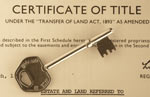

How Do You Hold Title to Your Assets?

How you hold title to an asset affects how it can be disposed of during lifetime and how it will be distributed upon your death. Title to property affects inheritance taxes and the extent to which probate may be needed.

Community Property. Nevada is a community property state. Property acquired during marriage by the labor of either or both spouses is deemed “community property” and each spouse has an equal interest therein.  It is possible to acquire or hold property as “community property” or as “community property with right of survivorship.” The additional language “with right of survivorship” ensures that the surviving spouse will receive title to the whole of the asset upon the death of the first spouse. Holding an asset as community property also creates a tax advantage, in that the surviving spouse will get a step up in basis on the asset to the date of death of the first spouse. In other words, the surviving spouse will not have to pay a capital gains tax on the increase in value from the date of purchase to the date of the first spouse’s death.

Separate Property. A married person may also hold property as his or her separate property. This includes property that was acquired prior to marriage, or property acquired during marriage by one spouse only as a gift or an inheritance. A spouse with separate property may make a gift of that property to the community by deeding or changing title of the asset to community property. If the spouse continues to hold the property as separate, upon death the spouse may will it to anyone he wishes; the surviving spouse does not have any legal right to it. However, if a spouse with separate property dies without a will, separate property will pass according to Nevada’s laws on intestate succession, and the surviving spouse will be entitled to a share of the property.

Joint Tenancy. Two persons, whether or not married, may hold property as joint tenants. Upon the death of one joint tenant, the surviving joint tenant becomes the owner of the whole of the property. In other words, the heirs of the first joint tenant to die do not inherit that person’s interest in the property; it passes by operation of law to the surviving joint tenant. For this reason, sometimes joint tenancy language also says “with right of survivorship.” For married couples, a partial step-up in basis is available if title is held in joint tenancy.

Couples should be aware of and sensitive to the manner in which they hold title. A change in how an asset is titled will change how the asset is distributed at death. If you have questions or concerns, you should contact a qualified Nevada attorney.

By: Sharon M. Parker, Esq.

Divorce Forfeiture Provisions in a Will or Trust

A forfeiture provision may be drafted such that a couple must remain married in order for both spouses to receive distributions or withdrawals from the estate. Such a provision would not be invalid because the provision does not encourage divorce or disrupt the family relations. None of the Restatements of Law, which are legal treatises, prohibit forfeiture provisions upon divorce. In fact, some states allow reasonable restrictions upon remarriage of a surviving spouse.

Certain provisions in a will or trust may be held invalid on the basis that they would disrupt family relations. For example, a provision which provides for the payment of money to a beneficiary if he divorces or separates from a spouse may be invalid. Similarly, a provision which prohibits distributions to a beneficiary if he does not divorce or separate from a spouse may be invalid. Also, a provision cannot deny a bequest until a beneficiary’s spouse dies or the beneficiary divorces his spouse. Likewise, a trust or will provision must not prohibit marriage altogether or severely limit a beneficiary’s choice of spouse.

A dispositive instrument, will or trust, may provide for a beneficiary in the event of a divorce or death. A special disposition to an unmarried beneficiary may be available to relieve pressure upon the beneficiary to remain in or enter a marriage. Wills and trusts can be custom drafted to fit many varied situations. Whenever possible, the construction of a trust instrument will be favored that upholds the validity of the trust and renders the instrument effective.  Despite judicial inclination to uphold trusts, provisions violating public policy will be held invalid.

“Inception” Lacks a Trust

In the recent Hollywood hit movie, Inception, Leonardo DiCaprio plays a corporate espionage thief who extracts information from subjects while they are dreaming. DiCaprio and his crew of thieves are hired to plant an idea in the mind of an heir to the world’s most powerful energy company. The spies seek to coax the heir into believing his father wants him to break-up the father’s vast energy empire. The flaw in Inception is that the dying patriarch of the energy giant sets forth his wishes in a last will and testament. The average business owner or an energy titan owner would not hold business interests outside of a trust or set forth his dispositive wishes in a will.

A trust serves many valuable functions; it is not just for business owners (or, the wealthy). A few reasons why you should consider putting your assets in a trust:

  • Provide Financial Management of your Property – You may act as trustee at first and later decide you no longer wish to do so. A trustee or successor trustee you’ve selected can take over the day-to-day property management.
  • Provide Property Management if you can’t manage your affairs – If you become too ill or disabled to manage your property, your trustee or successor trustee will do this for you. With no trust in place, you would need a guardianship (or, conservatorship outside of Nevada). You can avoid the trouble and expense of setting up such arrangements if you have a living trust.
  • Avoid Probate – Property in your revocable living trust doesn’t go through probate after your death. However, if you fail to title property in the name of the trust, those assets will have to pass through probate.
  • Quick Distribution to Beneficiaries – This is another advantage of avoiding probate. The probate process delays property distribution. With a trust, your trustee can distribute property to your beneficiaries sooner.

A trust does not eliminate the need for a will. You may have property that never gets transferred to your trust. A will can act as a backstop to transfer any property to your trust. However, if you happen to own the world’s largest energy company, you should definitely have a trust.

by: Jason Morris, Esq.

Upside Down and Topsy Turvy

It is unfortunately all too common these days that a house or other asset is worth less than the mortgage owed on it. What happens if the owner dies, leaving the upside down asset to a spouse or children?

There’s good news and bad news. The good news is that the heirs of the deceased can still inherit title to the asset via probate (if it is held in the deceased’s name) or via a deed from the successor trustee (if it is held by a trust). The bad news is the lender will not simply allow the heirs to make payments on the same mortgage. The lender’s agreement to loan was with the deceased, based on his or her credit history and income. Any heir would have to pay off the debt or obtain a new loan; and the trouble is, of course, that a lender will not want to lend more than the asset is worth.

Is there a solution? If the asset is significantly over-encumbered, it doesn’t make sense to bother transferring title to the heir. Instead, you can just allow the asset to be foreclosed upon or repossessed. If the asset has some sentimental value and is not significantly over-encumbered, you can pay off the debt, or pay it down to an acceptable level and borrow the rest—if your credit is good and you are able to get a loan. I had a client whose mother died, leaving a luxury car worth about $39,000 with a debt of $42,000. My client was herself wealthy and decided simply to pay off the debt and take title to the car. Not many people can afford to do this, however.

If you are confronting this issue, you should contact a qualified Nevada probate attorney.

By Sharon M. Parker