Category Archives: Wills

Careful with Deathbed Planning

As death looms, people become much more focused on arranging their affairs.  Even those with few assets will develop a laser-like focus on leaving a suitable legacy.  There are pitfalls to death-bed estate plans or revisions to existing plans.  In a perfect world, an estate plan is constructed carefully after much thought and revisions are made regularly.  However, lawyers and financial advisors are often solicited to make changes when a client fears an imminent demise.
Image

Recently, I helped clients update their revocable living trust after the wife was diagnosed with terminal cancer.  They created their trust 20 years ago and had not made any updates since that time.  In the intervening years, one of their five children had passed away and numerous grandchildren had been born.  The prior version of their trust provided that if one of their children predeceased them, the surviving children would receive the estate equally.  The clients instead wanted the trust share that would have passed to the deceased child to be held in trust for the deceased child’s children or the clients’ grandchildren.  If nothing had been done, the clients would have disinherited their grandchildren.

When making near-death amendments or creating new estate plans, advisors and clients must consider the income tax ramifications. A common mistake is to transfer a home or real property to children or grandchildren prior to death.  Such a transfer results in loss of the step-up in basis of the property to the date-of-death fair market value.  The child or grandchild receiving the property steps into the shoes of the transferring parent or grandparent and takes the transferor’s basis in the property.  Usually, the basis is much lower than the present day fair market value.  When the child or grandchild sells the property, he or she will incur a much higher capital gains tax than necessary.

Finally, to avoid a contest, a medical or mental competency examination can assure that the client is competent to make the change.  These exams can be administered by the client’s regular physician.  By using their normal physician, the client will feel more at ease and the physician will already have a history with the client and be able to differentiate whether the client lacks capacity.

Death-bed planning can be done effectively but there are numerous considerations and precautions to follow.
Updating Your Estate Planning after You Get Married

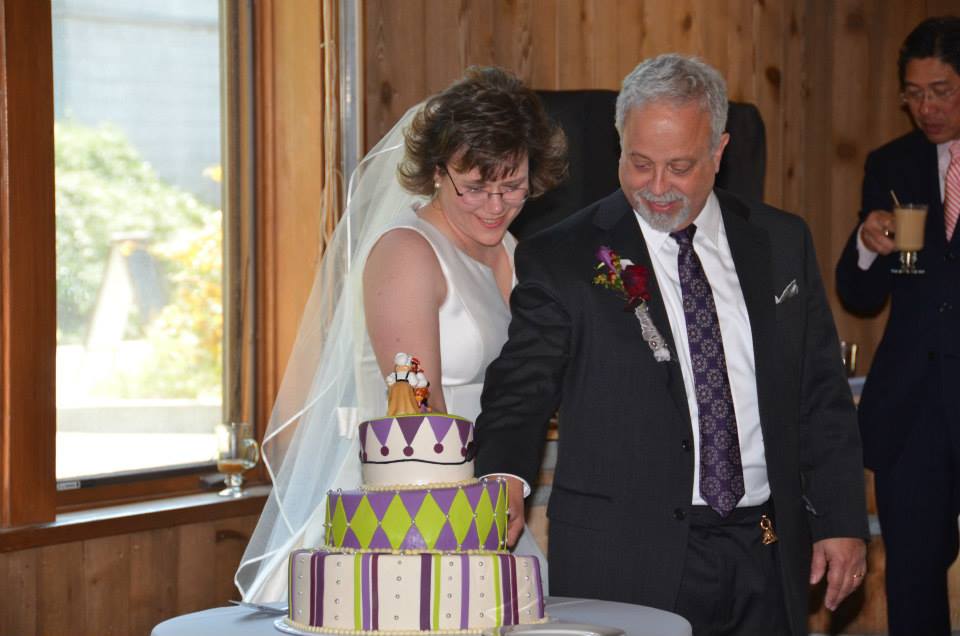
ImageMy husband and I were married this past May 25, so today we are celebrating our sixth mensiversary (or, perhaps our semi-anniversary?). Our marriage has truly been a great blessing for both of us—doubly so because we waited until later in life to find each other. As a probate and estate lawyer, I’d like to report that as soon as we got married, we set up a trust and put all our assets in it, so that we’re perfectly prepared for the day when death does us part. However…it seems that life is a bit messier and more complicated than that, even for lawyers in love. We’ve each taken the step of updating our wills, and many of our assets are now jointly owned; but truth be told, we have a way to go before we are done combining our assets.

How does marriage change your estate planning needs? I’ve had opportunity to reflect on this recently not only because of my own life, but also because of some of the cases I’ve worked on. In one case, a couple cohabited for several years before the man died. He left no will, so pursuant to intestate succession, his child will inherit his estate. However, the former girlfriend has made a claim against his estate, claiming that they held their property in a kind of quasi-community property agreement. Would it have made a difference if they’d been married?

Yes and no. Simply getting married doesn’t mean your property is jointly held or will go to your spouse upon your death. Nevada is a community property state, meaning that money earned or assets purchased during marriage are presumed to be community property in which each spouse has fifty percent interest. Upon death, the surviving spouse inherits the other half of the community property, unless the deceased spouse provides otherwise in his or her will. Property that you owned before marriage is separate property and remains so unless you make a gift of it to the community of your marriage. Your spouse may inherit a portion of your separate property, but a portion will go to your natural relatives (children from previous marriage, parents, siblings)—again, unless you provide otherwise by will. Things can get very complicated if your assets become mixed in character; for example, if you have a house partially paid off that you bring into the marriage, and you finish paying it off while married. The house is separate to the degree you paid for it before marriage and community property to the degree that your income during your marriage was used to pay the mortgage.

My husband and I have not been married previously and neither of us has any children. If we have no children together, we will need to make provision for how our assets will be distributed upon the death of the second spouse—it will need to go to charities we both agree on, or equally to our surviving relatives. In the case of people who have children from a previous marriage or relationship, things are more complicated. You need to provide for your children while taking into consideration the needs of your new spouse.

Don’t put off your estate planning—consider it an act of love for your family, who doesn’t want to be left with a mess. Contact Woodburn and Wedge for expert advice and assistance with estate planning, trust and probate matters.

Is it Possible to Inherit Even Though the Will Disinherits You?

LWT Nov. 2013           I recently received a call from a man whose wife was the beneficiary of her uncle’s estate in Nevada. He was troubled because after the estate had been open for quite some time, the lawyers had informed his wife that the largest estate asset was in fact going to go to the daughter of the deceased, who had been disinherited in the will. It turns out that the asset was an account that had a beneficiary designation. The deceased had named his daughter as beneficiary. He later executed a will disinheriting his daughter and leaving his property to his niece and other relatives. Unfortunately, he evidently had forgotten about the account when he executed his will.

What’s wrong with this scenario? First, the deceased should have changed the beneficiary designation on his retirement account. At a minimum, he could have made his estate the beneficiary, so the asset would pass as provided in his will. Even better, he could have designated the same people as were in his will to receive this asset. Second, why did the lawyers open a probate for this asset if there was a beneficiary designation? An asset with a beneficiary designation does not pass through probate; the financial institution should simply have closed the account and distributed it directly to the designated beneficiary. Evidently the lawyers didn’t realize the account had a beneficiary designation—but why the probate had been open for more than a year before they learned that, I couldn’t say.

Lesson learned: If you want to leave your assets to someone, having a will is a good start but it is not sufficient. Assets may pass by beneficiary designation. They may also pass to a joint owner if you hold an account or a house as a joint tenant, for example. It is important to review all of your assets and how they are held, and take action to ensure that they pass to the person or persons you wish to benefit. Working with a knowledgeable lawyer is always recommended.

Talking to Heirs About Their Inheritance

Image

Do your heirs know how much they stand to inherit from you?  Have you ever received an unexpected inheritance?  Many clients debate how they should notify their heirs of the amount and extent of the expected inheritance.  On April 22, 2013, the Wall Street Journal published an aptly-titled article “The Inheritance Conversation. Ugh.”  Many fear the inheritance topic and avoid the subject just as they avoid adequate estate planning.  However, there are practical steps you can take to assure that your heirs are prepared for the receipt of assets and property.

Most recognize the importance of preparing and disclosing information about inheritance to their heirs, yet few take the time properly prepare their heirs.  Children should not receive much financial information until they reach their 20s.  While certain teenagers may be precocious and able to comprehend the value of a dollar, clients must be cautious to avoid undermining their work ethic. Simply telling children how much they stand to inherit can weaken the determination of even the most capable individuals.

Importantly, children of wealthy parents will not learn financial management by osmosis.  Parents must take an active role in educating and informing their children about financial planning and management.  Several advisors recommend a mentorship whereby the heirs are given an opportunity to manage a smaller portion of the assets.  As the heirs gain in knowledge and ability the children or others can be given more knowledge of the family’s wealth.

One crucial element is requiring heirs to secure and maintain jobs.  With their earnings, the heirs can be instructed on the importance of saving and sharing their assets. Most successful wealth transfers occur where children have learned the value of work and wages earned.

I continually remind clients that their best laid plans can be undone by unexpected health concerns or other financial catastrophes (see the most recent recession).  For those who have a revocable living trust, I urge them to remind their children that the children’s shares are not fixed and can be altered.  No one should expect or rely upon a set amount of money or assets passing to them.

Simply start with a basic conversation with family members and other heirs.  Avoiding this topic can cause confusion, mistrust and leave heirs unprepared to manage the family’s wealth.  For those who need assistance in this process, our office is experienced in wealth transfer planning.

Carson City Recluse Leaves $7 Million Fortune in Gold

A Carson City man, Walter Samaszko, passed away in June with apparently no heirs and very little personal wealth.  However, cleaners preparing his house for sale discovered he held over $7 million in gold.  The Mercury News reports that a San Rafael, California woman appears to be the sole heir to the fortune. 

Mr. Samaszko, an anti-government champion, was dead for at least one month before neighbors discovered his corpse. Months later, the vast fortune was uncovered and includes stock accounts valued at over $165,000 and cash of $12,000.  The estimates of the $7 million estate are solely based on the weight of the gold.  However, there are rare, antique coins in the collection which could drive the total value far higher.

While this case is extremely unique for a number of reasons, there are lessons to be learned:

One, never assume the size or extent of anyone’s estate.  Despite appearances to the contrary, there are many wealthy individuals who show no signs of their wealth.

Two, plan now for incapacity and death.  There is no telling what Mr. Samaszko intended to do with his gold collection.  However, some simple estate planning could have assisted him in avoiding over $1 million in taxes.  Likely Mr. Samaszko would be abhorred to think that the government will be the beneficiary of his failure to plan.

Three, keep in contact with relatives, whether distant or remote.  You never know if you might end up becoming the lucky recipient of a gift or bequest from a family member.