
Category Archives: Estate Planning

“Inception” Lacks a Trust

In the recent Hollywood hit movie, Inception, Leonardo DiCaprio plays a corporate espionage thief who extracts information from subjects while they are dreaming. DiCaprio and his crew of thieves are hired to plant an idea in the mind of an heir to the world’s most powerful energy company. The spies seek to coax the heir into believing his father wants him to break-up the father’s vast energy empire. The flaw in Inception is that the dying patriarch of the energy giant sets forth his wishes in a last will and testament. The average business owner or an energy titan owner would not hold business interests outside of a trust or set forth his dispositive wishes in a will.


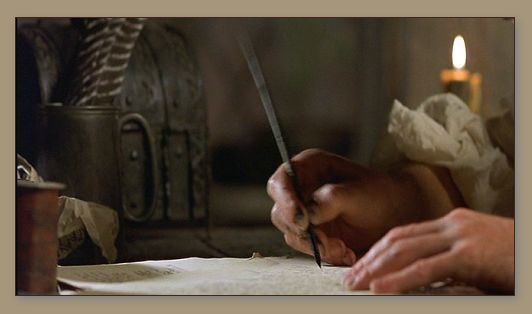
A trust serves many valuable functions; it is not just for business owners (or, the wealthy). A few reasons why you should consider putting your assets in a trust:

  • Provide Financial Management of your Property – You may act as trustee at first and later decide you no longer wish to do so. A trustee or successor trustee you’ve selected can take over the day-to-day property management.
  • Provide Property Management if you can’t manage your affairs – If you become too ill or disabled to manage your property, your trustee or successor trustee will do this for you. With no trust in place, you would need a guardianship (or, conservatorship outside of Nevada). You can avoid the trouble and expense of setting up such arrangements if you have a living trust.
  • Avoid Probate – Property in your revocable living trust doesn’t go through probate after your death. However, if you fail to title property in the name of the trust, those assets will have to pass through probate.
  • Quick Distribution to Beneficiaries – This is another advantage of avoiding probate. The probate process delays property distribution. With a trust, your trustee can distribute property to your beneficiaries sooner.

A trust does not eliminate the need for a will. You may have property that never gets transferred to your trust. A will can act as a backstop to transfer any property to your trust. However, if you happen to own the world’s largest energy company, you should definitely have a trust.

by: Jason Morris, Esq.

Online Estate Planning

Today, I can roll out of bed and with a few clicks on my phone, transfer money from my checking account to my online savings account, purchase a song on iTunes, and make a payment on my power bill. Years ago, each of these discrete activities would have required separate trips to various businesses. At the very least, each activity could not be accomplished online.

The shift to a virtual world directly affects our everyday lives and what occurs at our death. With the explosion of social media and increasingly more powerful smartphones, the significance of our online presence is not limited to financial accounts. Social media giants like Twitter and Facebook have adopted deceased user policies. Prior to the Virginia Tech massacre in 2007, Facebook automatically closed down user profiles after death. Students, families, and friends objected to this policy because they wanted to leave tributes and messages on the shooting victims’ profiles. Now, following notice of a deceased user, Facebook allows profiles to be “memorialized,” or changed into tribute pages without certain personal information.

Heirs may want to maintain sites or blogs with special sentimental value such as photo sharing sites like Kodak Gallery, Shutterfly, and Flickr. Many blog creators and Twitter users have hundreds if not thousands of followers. With all of the time and effort expended in creating and posting interesting content, the users would not likely want their online presence to vanish immediately upon their passing.

Can a surviving spouse access any of the online accounts mentioned above? For years, consumer advocates warned of the pitfalls of keeping a written list of our passwords. Create strong passwords with numbers, letters, symbols, and capitalized letters! Do not share your passwords with anyone! However, this caution-filled advice can create problems at death. I confronted this dilemma recently when a client sought to bequeath his online gaming account to a designated beneficiary. The client determined it was best if our office kept the login information rather than give the information to the designated trustee. The client confessed that he did not want the trustee to see how much he had expended (lost) on the hobby. For good reason, many of us would not want our loved ones to access our email and other online accounts.

Therein lies the dilemma. Several companies offer a potential solution. Three main competitors, AssetLock.net, Legacy Locker, and Deathswitch.com, are online services that allow users the ability to pass on their online assets. The companies give account access to various designated beneficiaries by giving the beneficiaries your passwords and can send final messages to friends. The online companies charge yearly or lifetime fees to act as your digital personal representatives. The conundrum is that these services will require human “verifiers” that the account holder is deceased and the online assets should be distributed.

The procedure for obtaining online account access can be even more burdensome if someone is incapacitated. If the incapacitated person has not executed a power of attorney, his or her spouse or family will need a guardian or conservator appointed. This may not suffice as certain financial institutions will require a court order customized to the particular account. All of these predicaments beg the question: What to do?

Individuals could give a lawyer or dependable relative all of the online account information. If you are fortunate to have several trustworthy loved ones, you could split up your accounts among a group of different people. The tried-and-true approach of leaving vital, important documents in a home safe or safety-deposit box could work well too. However, ensure that someone can access the safe or deposit box. At the very least, you should maintain a list of your online accounts and the domain names and inform someone where the list is.

Even if you have permission to use a spouse or family member’s online accounts during life, legally you may not be able to access their accounts after death. Notify the service provider so that others do not prey upon the account. Such notification will stop online bill pay services and other automated transactions. For those collecting Social Security benefits, loved ones must return any payments received after a recipient passes away. Benefits are often paid through direct deposit which should be stopped by notifying the bank and the Social Security Administration of the recipient’s death.

The law is sluggish in maintaining pace with the rapid evolution of online services. Clients and their counsel must be aware of the looming issues before losing Face(book) and turning to Google for solutions. If you have questions or concerns, you should contact an estate planning attorney.

This article appears in the December 13 edition of Northern Nevada Business Weekly.

Generation Skipping Transfer Tax Year-End Planning

Often overlooked during this “year-to-die” without an estate tax, the generation skipping transfer (“GST”) tax lapsed on January 1, 2010. Similar to the estate tax, the GST tax lapse affords some great year-end tax planning opportunities. These opportunities will not last long as the federal estate and GST tax regimes return on January 1, 2011.
Outright Gifts
Different from the estate and GST taxes, the gift tax remains in effect in 2010. The $1 million gift tax exemption remains with a 35% tax rate. Without congressional action, the gift tax rate will increase to 55% on January 1, 2011. Individuals may seek to take advantage of the historically-low gift tax rate by making outright gifts to beneficiaries. This simple, straightforward tactic may be advantageous for those looking to take advantage of the lowest gift tax rate seen in 70 years.
Gifts to Grandchildren
Another worthwhile consideration is giving assets to grandchildren. This year, grandparents can gift unlimited amounts of assets to grandchildren free from the GST tax. As noted above, the grandparents would still pay gift tax on amounts in excess of the lifetime exemption. If the assets are given outright, instead of held in trust, the assets will be held tax-free until the grandchild’s death. As this year has proven, we cannot anticipate where the GST tax rate will be in future years. As a result, individuals should make outright gifts to grandchildren and pay any gift tax at the lower 35% tax rate on any such gifts, and thereby avoid any future GST tax on such assets. If grandchildren are too young or irresponsible to handle large amounts of money, gifts of interests in a limited liability company managed by a responsible family member could be a substitute for monetary gifts.
Distributions from Trusts
With the lapse of the GST, individuals holding assets in non-exempt GST trusts should consider making distributions to the trust creator’s grandchildren. These distributions will be subject to GST tax in 2011 and later years. The non-exempt GST trust distributions are not subject to the gift tax and will avoid GST tax in 2010. In addition, by distributing the assets this year the assets will not be subject to the GST tax upon the death of the grandchild’s parent.
Caution
Although it is unlikely, Congress may enact a retroactive estate and/or GST tax for 2010. In light of the heated debates over the extension or modification of the Bush income tax cuts, there exists a very remote chance that Congress would take such action. Because of the continued uncertainty, individuals should take precaution to properly structure and document any gifts or distributions made before year-end.

Do It Yourself Estate Planning?

               Some years ago a woman called me in distress. Her neighbor, Mary, had died leaving some handwritten “final instructions”. The instructions were entirely in Mary’s handwriting and were signed, notarized and dated. Mary and her late husband had both prepared handwritten wills leaving all their property to charity. After her husband’s death, Mary had crossed out some provisions and written changes in the margins. Mary had named her neighbor the executor of her estate, but Mary’s family had already begun to plunder her house. The neighbor had no idea if the “final instructions” was a valid legal document.

                 Are handwritten wills valid in Nevada? Yes, provided they meet the following requirements: they must be signed, dated, and the material provisions must be in the handwriting of the testator. We were able to probate Mary’s will, and her neighbor was appointed the representative of her estate. However, the estate was unnecessarily complicated by the way in which the will had been written. It took significant time and effort to petition the court for instructions as to the validity and interpretation of the will and of the changes made in the margins, which reduced the amount of money available to the ultimate beneficiary of the estate.

                 Many people are reluctant to do any estate planning because they do not want to face their own mortality. Others are reluctant to pay an attorney to prepare a will or trust because they think they can save money by writing their own will. While a handwritten or “holographic” will is valid in Nevada if it meets the statutory criteria, you may save your personal representative a great deal of trouble—and your heirs a great deal of money—if you pay a professional to do the job right.

Grantor Retained Annuity Trust (GRAT) Strategy

The acronym “GRAT” stands for the term “grantor retained annuity trust.”  As the name indicates, a GRAT is a trust (an irrevocable trust) to which the grantor (i.e., the person who creates the trust) transfers property but retains the right to receive a fixed annuity from the trust assets for a certain number of years.  The fixed annuity amount is a percentage of the initial value of the assets transferred to the GRAT.  At the end of the term of the GRAT, the remaining property in the trust (net of the annuity payments) passes to the remainder beneficiaries (e.g., the grantor’s children); provided, however, that the trust property will revert to the grantor’s estate if the grantor dies during the term of the GRAT.

Pursuant to IRS regulations, the value of the “gift” of the remainder interest is determined when the GRAT is created.  As described above, the remainder interest is the assets remaining in the GRAT, net of the annuity, when the term of the GRAT expires.  The value of the remainder interest for federal gift tax purposes is equal to (a) the value of the initial principal contribution to the GRAT, PLUS (b) a fluctuating theoretical interest rate earned on the principal (called the “section 7520 rate” after the Internal Revenue Code section which establishes the rate), MINUS (c) the value of the annuity payments to be made during the term of the GRAT.

GRATs are especially beneficial when, as is the case currently, interest rates (and the corresponding section 7520 rate) are low because the annuity paid to the grantor is less than it would otherwise be if the section 7520 rate were higher.  The section 7520 rate is currently only 2.0%.  If the rate of return on the GRAT assets during the term of the GRAT exceeds the applicable section 7520 rate, the remaining trust property after payment of the annuity amounts will be distributed tax-free to the remainder beneficiaries.  Therefore, the strategy with a GRAT is to contribute property to the GRAT which will either appreciate or produce income at a rate substantially in excess of the section 7520 rate.

We often use a “zeroed-out GRAT” to reduce the value of the remainder interest for federal gift tax purposes to zero at the time the grantor funds the trust.  Of course, if we reduce the remainder interest to zero, we must structure the zeroed-out GRAT so that the grantor’s retained interest is approximately equal to the value of the property transferred to the trust.  This results in an annuity equal to the value of the property transferred to the GRAT plus the assumed section 7520 rate.  If the trust property appreciates faster than the section 7520 rate any excess appreciation passes to the remainder beneficiaries free of gift and estate tax as long as the grantor survives the term of the trust.  Under the IRS Regulations, the annuity amount does not have to be the same amount for each year.  But, variations in the annuity amount from year to year may not exceed 120 percent of the amount payable in the previous year.

The length of a GRAT’s term is an important planning consideration.  The shorter the trust term, the more likely it is that the grantor will survive it.  The longer the term, the greater chance that the grantor will not survive it and the property will be included in the grantor’s estate.  However, with a long-term GRAT it is possible to lock in a low section 7520 rate for an extended period.  Also, if a trust’s term is too short, the chance that the property will appreciate diminishes and so does the amount of property passing to the remainder beneficiaries.  One solution to balance some of these risks is for the grantor to create a series of short-term GRATs and reinvest the annuity payments in the successive trusts.  This “rolling GRAT” approach manages the probability of failure by increasing the odds that the donor will survive the trust term and heightens the chance that the property will appreciate over the collective terms of the GRATs.  Note, however, that the rolling GRAT strategy still exposes the grantor to the risk of section 7520 rate increases.

A grantor should fund a short-term GRAT with property that he or she expects to appreciate rapidly.  For example, if a grantor owns a closely-held business and anticipates an initial public offering (IPO) in the near future, the grantor could contribute the stock of the company to the GRAT.  The remainder beneficiaries would then benefit from the appreciation resulting from the IPO during the term of the trust.

The grantor may also want to fund the GRAT with assets that the grantor can discount for gift tax purposes.  Examples include fractional interests in real estate, unmarketable assets such as stock in a closely-held company, and family limited partnership interests.  If the grantor can reduce the value of the asset at the time of funding, the taxable gift will also be lower.  If the business or property is sold at full value or even at a premium during the trust term then there will be substantial assets remaining in the GRAT for the remainder beneficiaries at the end of the trust term.

The fair market value of any non-cash assets initially transferred to a GRAT must be determined.  For example, real estate and unmarketable securities (such as stock or other interests in closely-held companies) must be appraised.  If the value of the asset is to be discounted, a second valuation is generally required to determine the amount of the discount.  Likewise, the trustee must determine the fair market value of any non-cash assets distributed to the grantor as part of an annuity payment.  Just as some assets may be discounted when they are contributed to the GRAT, they will likewise be discounted when they come out of the GRAT as part of an annuity payment.  Distributing discounted assets to the grantor as part of an annuity payment can substantially reduce the potential benefit of the GRAT and is generally discouraged.

In March 2010, a bill passed in the House of Representatives that would radically change some of the aforementioned GRAT strategies.  The bill would, among other things, require GRATs to have a minimum term of ten years and would prohibit zeroed-out GRATs.  Although the bill failed this time around, there is a strong likelihood that it will surface again.  Therefore, the window for establishing short-term GRATs may be closing in a matter of months.  If you have any interest in establishing a short-term GRAT, please contact Woodburn and Wedge.

by Don L. Ross, Esq.