
Author Archives: Sharon M. Jannuzzi

Why All Your Assets Should Be in Your Trust

Trust Jan. 2014           It happens all the time: People go to the trouble of setting up a trust, hoping to avoid the time and expense of a probate—but they either neglect to move all their assets into the trust, or they buy new assets and forget to take title in the name of the trust. Why is this a problem? If your assets are not in the trust, then the trust does not govern what happens to them at your death. Instead, they will be governed by your last will and testament, or by intestate succession if you don’t have a will, or your will cannot be located.

Depending on the value of the assets omitted from the trust, it may be necessary to open a probate proceeding with the court in order to get the assets to the intended beneficiaries. This involves spending time and money that could have been avoided if all assets had been titled in the trust.

Most estate planning attorneys have their clients execute a will “pouring over” any such assets into the trust—in other words, the trust is made the beneficiary of the will. In this case, the assets you left out of the trust will eventually get back into the trust, but only after an appropriate court proceeding. However, if your will cannot be found, or is invalid for some reason, the assets will go to your heirs according to the law, who may or may not be the beneficiaries of your trust.

What’s the best way to ensure your assets are properly titled in your trust? When you first set up a trust, make sure that the trust includes a schedule of assets intended to be transferred into the trust, and make sure that all of your assets are on that schedule. Next, you need to do some legwork: all real property should be transferred into the trust by means of a signed and recorded deed; and all titled personal property (cars, bank and brokerage accounts, etc.) should be transferred as well. Any time you purchase a new asset, make sure you take title in the name of the trust. If you refinance an asset, make sure the asset does not get bumped out of the trust in the process, and take steps to transfer it back in if this occurs. Finally, periodically review your assets to make sure they are titled in the name of the trust.

If you need assistance with this issue, you should contact a qualified Nevada estate planning and probate attorney.
Updating Your Estate Planning after You Get Married

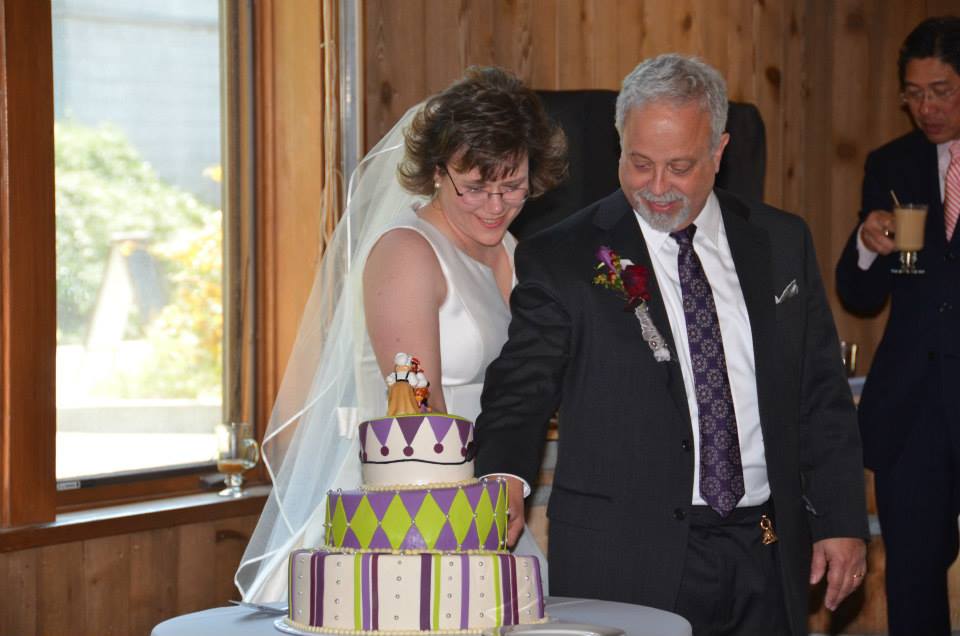
ImageMy husband and I were married this past May 25, so today we are celebrating our sixth mensiversary (or, perhaps our semi-anniversary?). Our marriage has truly been a great blessing for both of us—doubly so because we waited until later in life to find each other. As a probate and estate lawyer, I’d like to report that as soon as we got married, we set up a trust and put all our assets in it, so that we’re perfectly prepared for the day when death does us part. However…it seems that life is a bit messier and more complicated than that, even for lawyers in love. We’ve each taken the step of updating our wills, and many of our assets are now jointly owned; but truth be told, we have a way to go before we are done combining our assets.

How does marriage change your estate planning needs? I’ve had opportunity to reflect on this recently not only because of my own life, but also because of some of the cases I’ve worked on. In one case, a couple cohabited for several years before the man died. He left no will, so pursuant to intestate succession, his child will inherit his estate. However, the former girlfriend has made a claim against his estate, claiming that they held their property in a kind of quasi-community property agreement. Would it have made a difference if they’d been married?

Yes and no. Simply getting married doesn’t mean your property is jointly held or will go to your spouse upon your death. Nevada is a community property state, meaning that money earned or assets purchased during marriage are presumed to be community property in which each spouse has fifty percent interest. Upon death, the surviving spouse inherits the other half of the community property, unless the deceased spouse provides otherwise in his or her will. Property that you owned before marriage is separate property and remains so unless you make a gift of it to the community of your marriage. Your spouse may inherit a portion of your separate property, but a portion will go to your natural relatives (children from previous marriage, parents, siblings)—again, unless you provide otherwise by will. Things can get very complicated if your assets become mixed in character; for example, if you have a house partially paid off that you bring into the marriage, and you finish paying it off while married. The house is separate to the degree you paid for it before marriage and community property to the degree that your income during your marriage was used to pay the mortgage.

My husband and I have not been married previously and neither of us has any children. If we have no children together, we will need to make provision for how our assets will be distributed upon the death of the second spouse—it will need to go to charities we both agree on, or equally to our surviving relatives. In the case of people who have children from a previous marriage or relationship, things are more complicated. You need to provide for your children while taking into consideration the needs of your new spouse.

Don’t put off your estate planning—consider it an act of love for your family, who doesn’t want to be left with a mess. Contact Woodburn and Wedge for expert advice and assistance with estate planning, trust and probate matters.

Is it Possible to Inherit Even Though the Will Disinherits You?

LWT Nov. 2013           I recently received a call from a man whose wife was the beneficiary of her uncle’s estate in Nevada. He was troubled because after the estate had been open for quite some time, the lawyers had informed his wife that the largest estate asset was in fact going to go to the daughter of the deceased, who had been disinherited in the will. It turns out that the asset was an account that had a beneficiary designation. The deceased had named his daughter as beneficiary. He later executed a will disinheriting his daughter and leaving his property to his niece and other relatives. Unfortunately, he evidently had forgotten about the account when he executed his will.

What’s wrong with this scenario? First, the deceased should have changed the beneficiary designation on his retirement account. At a minimum, he could have made his estate the beneficiary, so the asset would pass as provided in his will. Even better, he could have designated the same people as were in his will to receive this asset. Second, why did the lawyers open a probate for this asset if there was a beneficiary designation? An asset with a beneficiary designation does not pass through probate; the financial institution should simply have closed the account and distributed it directly to the designated beneficiary. Evidently the lawyers didn’t realize the account had a beneficiary designation—but why the probate had been open for more than a year before they learned that, I couldn’t say.

Lesson learned: If you want to leave your assets to someone, having a will is a good start but it is not sufficient. Assets may pass by beneficiary designation. They may also pass to a joint owner if you hold an account or a house as a joint tenant, for example. It is important to review all of your assets and how they are held, and take action to ensure that they pass to the person or persons you wish to benefit. Working with a knowledgeable lawyer is always recommended.

Presentation on Probate, Wills and Trusts at St. Thomas Aquinas Cathedral

On Tuesday, April 17, 2012 at 1:00 p.m. attorney Sharon Parker will give a free presentation regarding probate, wills and trusts to the Senior Ministries group at St. Thomas Aquinas Cathedral, 310 West 2nd Street, Reno, Nevada, in Righini Hall. Lunch is provided at no cost but you must RSVP to Ed Kolesar in advance: 240-0328.

“Et In Arcadia Ego…”

Our celebration of Thanksgiving is past and now the time of year is upon us in which most people busy themselves with preparations for Christmas. The “holiday season” is a busy and stressful time of year, and this is perhaps a factor in the higher number of deaths that occur this time of year. I sometimes wonder what would happen if people put as much time into planning for their passing as they put into Christmas preparations each year.

We see many different situations in our office. Some folks call about estate planning literally from their deathbeds. Some die before the documents are prepared; others sign everything in the nick of time. Many people think there will be plenty of time in the future to take care of estate planning. Some people are afraid that if they form a trust or execute a will, it means they will die—so they put it off.

The reality is that we will all die, ready or not. It makes a lot more sense to have an estate plan in place so that the administration and distribution of your possessions will be orderly upon your death. It is especially critical if you wish to leave anything to charity, or in unequal shares to your children, or the like. Also, for those who do not have relatives in Nevada, it is important to designate who will act as executor or personal representative; non-residents are not qualified unless they are designated in a will, or associate with a resident.

If you have been procrastinating your estate planning, or updating your estate planning, I encourage you to make an appointment with a qualified estate-planning attorney.

By: Sharon M. Parker, Esq.