Author Archives: Sharon M. Jannuzzi

Can You Probate a Lost Will?

LWT March 2015

I once had a client whose husband had died many years previous, leaving a will in which he left all his property to her. The will had been prepared by a local attorney who later retired, and had died by the time the client retained me. The client had furnished a copy of the will to her accountant, who used it to prepare an estate tax return. However, the accountant only had a copy of the first few pages of the will, not including the signature pages. The client evidently lost the original will and could not locate a copy of it. All we had to go on was the copy of a portion of the will that the accountant had. I did my best to track down the original will or a copy. The drafting attorney was deceased and although I located his former secretary, she indicated that his files had not been retained; the will would have gone back to the client. In short, there was no extant copy of the full will.

Can you probate a lost will? In some instances, yes. If a will is lost by accident after the decedent’s death, or destroyed by fraud during the decedent’s lifetime and without his or her knowledge, a court may receive evidence of the execution and validity of the will. A lost will would have to be proved in the same way as other wills; the persons who witnessed the testator sign the will would have to testify to that fact. This may not be difficult if you know who the witnesses were and can locate them. Often the witnesses of a will are law office personnel. Most law office personnel who witness wills do so often enough that they would not be able to recall a particular instance; especially not where the will had been signed many years prior. If you can locate the witnesses and they remember the will, then the proponent of a lost will has to show that it is more likely than not that the will in question was never revoked by the testator; if no one objects, the court may admit it to probate. In the case of my client, we didn’t know who had witnessed the will because we did not have the signature pages or the pages signed by the witnesses. Without that, we could not offer the lost will for probate.

Lessons learned? Make sure your original will, and your spouse’s original will, are kept in a secure, fire safe location and that the location is known to those who will handle your estate at your death. Often an attorney’s office will store the original will in a vault. If your attorney retires and returns the original to you, put it in another safe place, such as a safe deposit box. Better yet, go to another attorney and see if the will needs updating; the new attorney may have a vault where the will and codicil could be stored. Make sure to keep full copies of the executed will. Finally, keep the original will and copies after the testator dies, even if you do not think there are any assets to probate at his or her death. This is critical! In the case of my client, her husband had died 20 years prior and she thought all assets were in joint tenancy at their death. It was only in refinancing some property that she discovered this was not the case.

If you have questions or concerns about lost wills or the proper care of original estate planning documents, consult with a qualified estate attorney.
Bleak House

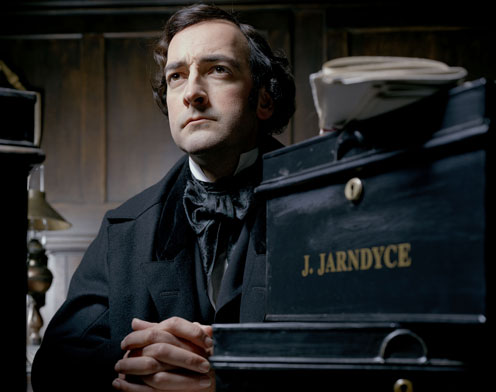
Bleak House Jarndyce

“There are two motives for reading a book; one, that you enjoy it; the other, that you can boast about it.” -Bertrand Russell

As both a lover of great literature and a probate lawyer, I put Bleak House by Charles Dickens on my “to read” list years ago. My father had mentioned it to me several times, noting with amusement that the estate lawsuit at the heart of the novel didn’t end until the money ran out. At 989 pages, it’s not what you’d call a weekend read, but I finally hunkered down and plowed through it. While it is anything but a positive reflection on lawyers and the legal system of nineteenth century England, it is wicked funny and a great read. (Plus, I can boast about it.) G.K. Chesterton is quoted on the back cover as saying it was “Perhaps his best novel…when Dickens wrote Bleak House he had grown up.”

The novel opens on the fog that engulfs the Chancery Court in London where probate cases were adjudicated. The case of Jarndyce and Jarndyce has been in probate for generations; people literally are born into the suit and die before it is resolved. Dickens is pretty vague about the particulars of the case. One character tells us, “‘Why, yes, it was about a Will when it was about anything. A certain Jarndyce, in an evil hour, made a great fortune, and made a great Will. In the question how the trusts under that Will are to be administered, the fortune left by the Will is squandered away; the legatees under the Will are reduced to such a miserable condition that they would be sufficiently punished, if they had committed an enormous crime in having money left them; and the Will itself is made a dead letter.”

Many of the novel’s characters are beneficiaries under the will and spend their lives waiting for the lawsuit to be resolved. One unfortunate young man, Richard, drives himself to an early grave in his obsession to see the suit completed. Miss Flyte, another beneficiary, keeps a series of birds locked up in a cage, intending to let them free when she is free of the lawsuit and receives her inheritance.

Dickens is merciless about the purpose of all the delay: “The one great principle of the English law is, to make business for itself. There is no other principle distinctly, certainly, and consistently maintained through all its narrow turnings. Viewed by this light it becomes a coherent scheme, and not the monstrous maze the laity are apt to think it. Let them but once clearly perceive that its grand principle is to make business for itself at their expense, and surely they will cease to grumble.” Thus, as one character dryly remarks, “Equity sends questions to Law, Law sends questions back to Equity; Law finds it can’t do this, Equity finds it can’t do that; neither can so much as say it can’t do anything, without this solicitor instructing and this counsel appearing for A, and that solicitor instructing and that counsel appearing for B; and so on through the whole alphabet, like the history of the Apple Pie.”

Let’s just say it will not endear you to lawyers or the legal system; but mercifully, the 21st century American probate court little resembles its 19th century English counterpart. Our system is geared toward the timely resolution of disputes; and to the extent it fails, I have found that it is generally because angry litigants—not courts—want to use the legal system to wage Pyrrhic battles.

While the lawsuit in Bleak House forms the backdrop of the case, and gives Dickens the opportunity to train his savage wit on the English legal system, the heart of the story is not really about the lawsuit itself. Bleak House offers a wonderful panorama of characters and richly interwoven plots and subplots. It is partly narrated by Esther Summerson, one of the main characters, an orphan whose family origins are shrouded in mystery. It features unforgettable characters such as Lady Dedlock, the proud and aristocratic wife of Sir Leister Dedlock, who harbors a painful secret; Mr. Tulkinghorn, Sir Leister’s scheming lawyer who spends much of the novel hot on the tracks of Lady Dedlock’s secret, and whose death late in the narrative briefly turns the novel into a murder mystery; and Mr. Skimpole, the financially improvident rascal who remorselessly sponges off others while feigning a child-like innocence about the ways of the world.

Bleak House is well worth putting on your bucket list. And if you don’t want to invest the time reading it, I am informed that it was turned into a brilliant mini-series by BBC, though I have not seen it—yet. I’m putting it on my “to watch” list.

Who Gets Your Property if You Die Without a Will?

natasha_fatalle___boris_badenov[1]

In my last installment (Who Is Qualified to Serve as Administrator of an Estate?), I wrote about Boris and Natasha and the Big Fight occasioned by Boris dying without a will. As you may recall, Boris had two adult children from a prior marriage when he married Natasha. He and Natasha had two children before Boris died without a will. His property was substantial and all of it was acquired prior to his marriage. What happened to the property on his death?

The good news is that no one was disinherited, and the property did not escheat to the state. Nevada law provides for property to go to your closest relatives if you die without any estate planning in place. In a community property state such as Nevada, a married person’s property may be either community or separate, or some combination of the two. Separate property is property acquired before marriage, as well as property acquired by gift or inheritance during marriage. All property earned during marriage, or purchased with earnings during marriage, is community property. These characterizations can be changed by a written agreement if the couple wishes.

For Boris and Natasha, all of Boris’s property was separate property and he left no will. Nevada law provides that in such case, the surviving spouse is entitled to one third of the separate property, and—because he had more than one surviving child—the children were entitled to equal shares of the remaining two-thirds. Boris did not put any of his assets into joint tenancy with Natasha, but if he had, Natasha would have succeeded to such assets. Once the estate administration finished, Natasha received one-third of Boris’s assets; the couple’s minor children received one-third subject to a guardianship or trust until they became adults; and Boris’s two adult children received the remaining one-third in equal shares.

Who Is Qualified to Serve as Administrator of an Estate?

Treasure Chest

Some years ago a wealthy older man I’ll call “Boris” got married to a foreign national half his age. Boris was a Nevada resident. He brought “Natasha” to the U.S. after their marriage. She was intelligent but did not speak English well and was unfamiliar with American culture and basic business practices. Boris had two adult children from a prior marriage who both lived out of state. Three years after his marriage to Natasha, Boris died without any estate planning in place. At his death, who was qualified to be the administrator of his estate?

If Boris had made a will, he could have nominated whomever he wanted to act as executor of his estate. (As a note on vocabulary, the term “executor” refers to someone nominated in a will, whereas the term “administrator” refers to someone appointed by the court in a situation where there is no will.) If a Nevada resident dies without a will, that person’s estate may be administered by a qualified person. The Nevada probate code sets forth the priority in which the court will consider candidates; a surviving spouse has first priority, and a child (18 or older) has second priority.

Need I say that Boris’s adult children did not get along with Natasha all that well? They did not trust her at all, and they believed she did not speak English well enough nor understand basic survival skills nor basic obligations (e.g. that Boris’s death did not mean his bills didn’t have to be paid) to be the administrator of their father’s estate.

What qualifies someone to act as the administrator of an estate where there is no will? An administrator must be at least age 18 and not convicted of a felony, unless the court determines that such a conviction should not disqualify the person. Someone will be disqualified if upon proof, he or she is adjudged by the court to be disqualified by reason of conflict of interest, drunkenness, improvidence, or lack of integrity or understanding. Finally, the person must either be a Nevada resident or must associate as a co-administrator with someone who is a Nevada resident.

Boris’s children had two impediments to petitioning for appointment of themselves as administrator: they were not Nevada residents and they did not have priority over Natasha because she was Boris’s surviving spouse. In order to prevent Natasha from serving as administrator of the estate, it was necessary for them to prove in court that Natasha was disqualified by reason of improvidence or lack of integrity or understanding. In the end, however, neither Natasha nor the children were appointed administrator. Instead, Natasha invoked a statute that allowed her, as the person with first priority, to nominate someone else to act as administrator—and she nominated a local accountant who was perfectly qualified and did a great job.

Lesson learned? Do some estate planning—preferably while you are still well enough to think clearly and act independently. Choose a personal representative who is both competent and trustworthy. Boris could have avoided a fight among his relatives by executing a will naming someone to act as executor of his estate, and he could have better provided for disposition of his assets—which were significant.

You may be wondering what happened to Boris’s estate—who was entitled to receive his property? Stay tuned for the next installment of As the Probate World Turns.

Heggstad Petitions in Nevada: Or, How to Bypass Probate and Get an Asset into a Trust after Death

Washoe Co. Court House

It is unfortunately all too common that clients who set up a trust forget to transfer one or more assets into the trust; or they purchase a new home or other asset, and do not title it in the trust. In some cases, it is possible to avoid having to probate assets omitted from the trust if you can prove that the deceased intended to include that asset in his trust. In Nevada, this can be accomplished by way of filing a Heggstad petition with the probate court.

The name of the petition comes from a 1993 California case, In Re Estate of Heggstad, in which Mr. Heggstad created a trust but failed to execute the necessary paperwork to transfer his interest in certain real property into his trust. The successor trustee argued that Mr. Heggstad had intended that the asset be transferred to the trust by the fact that it was included in the schedule of assets attached to the trust. The court agreed, finding that that a written declaration of trust by the owner of real property, in which he names himself trustee, is sufficient to create a trust in that property; the law does not require a separate deed transferring the property to the trust.

In Nevada, the Heggstad case is not binding law, but a Heggstad type petition is provided for in the probate code, which allows a trustee or other interested person to petition the court to enter an order if the trustee has a claim to property and another holds title to or is in possession of the property. Pursuant to Nevada law, an omitted asset can be placed into the trust without a probate proceeding.

Under what circumstances will this be successful? You have to prove that the asset was intended to be in the trust. Inclusion of the asset on the schedule of assets was deemed sufficient in the Heggstad case. Another possibility is to show that the asset was in the trust but was inadvertently removed for some reason; for example, you had a bank account at First Bank titled in your trust and closed it and opened a new account with the money at Second Bank, but forgot to open the new account in the name of the trust. Each situation is different, but a knowledgeable probate attorney can help you evaluate your case.

In order to put the asset back in the trust, it is necessary to prepare and file a petition in the appropriate district court. The petition is set for a hearing and if approved, the court will issue an order transferring the assets into the trust without any further proceedings. This is a huge advantage over opening a probate estate as it cuts down significantly on the time required and on fees and costs.

Contact Woodburn and Wedge with your trust and estate issues. We can help you evaluate whether a Heggstad petition would work for your situation or whether another procedure is appropriate.